Author: UConn Team Wins CIM-LRD Design/Construction Student Competition
April 28, 2023
On Saturday, April 22, a team of UConn students competed in the annual CIM-LRD Student Competition in Heavy Civil Infrastructure Design/Construction, where they won first place in designing and proposing a western extension of the MBTA Blue Line subway in Boston.
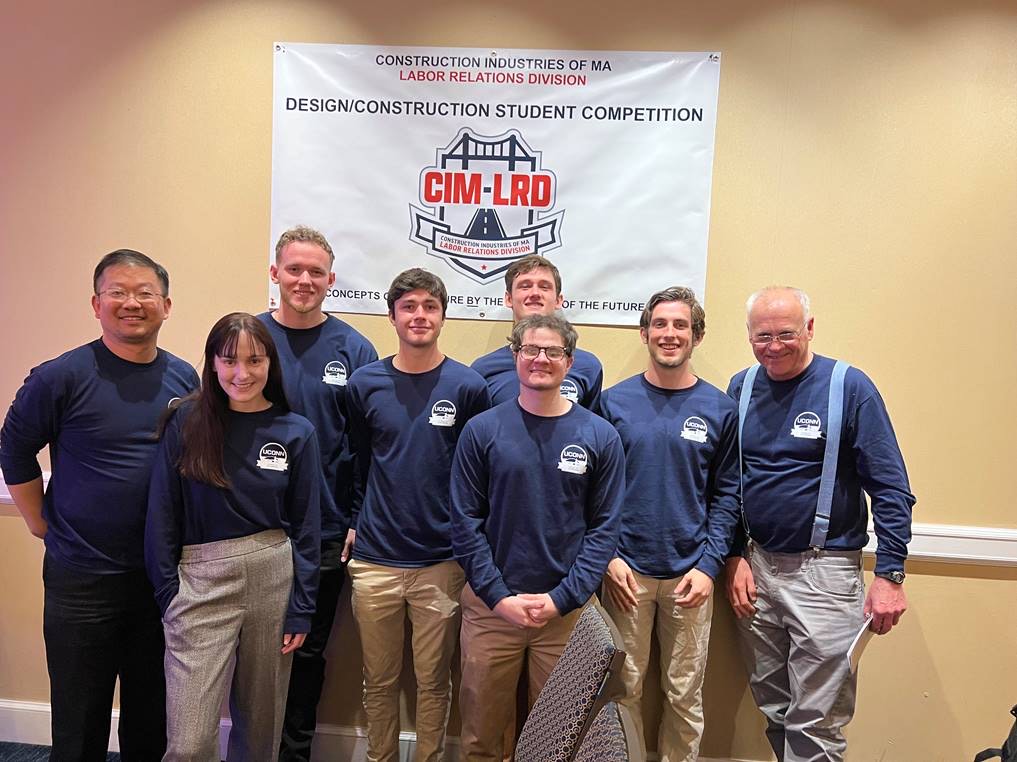
"My team and I worked on the Blue Line Extension Project which involved the design of two new subways stations consisting with platforms, stairs elevators, hallways and much more," team leader Flynn Iesu said in an e-mail interview. "The game plan was to design a one plate-form station for both location at Dartmouth/Newbury intersection and Park Street. All other factors had to fit the constraint of a one platform station."
Iesu and his colleagues revolved their choices around economical and fast approaches for the construction of this extension, with each member being tasked with 15 percent of the design plans. Team members Kevin Coen, Zachary Silvay and Eric Kozikowski helped with the designs, while Jonathan Garcia and Grace Webb worked on the scheduling, cost estimation, and geotechnical aspects. Iesu credits team mentors Jake Corbett, Randall States and David Jacobs for providing wisdom.
"It was a group effort in making the construction process which I then animated in sketchup to showcase the whole construction process for the competition," Iesu said. "After finishing all of the potentially deliverables, my team and I crafted up a elite presentation which we practiced in the weeks approaching the competition. Our mentors Jake, Randy and David gave us tips and wisdom throughout the whole year which helped nudge our team in the right direction."
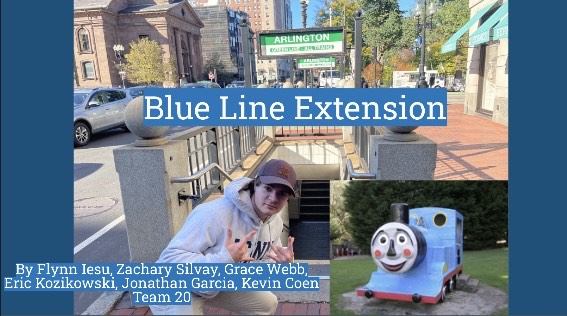
On how his team members contributed, Iesu said, "Jake was a professorial architect who helped me a lot with small informational nuance’s such as the standards of dimensions used in the industry for stairs, hallways, and many other dimension requirements. This was a huge influences in a lot of the dimensions used for both of the stations. Randy was a geotechnical engineer who we consulted on our ideas for methods dealing with excavation and support of excavations. Lastly, David, who was a structural engineer, helped us with finalising our calculation for choosing and designing loads for beams and reformed concrete."
"I would like to thank Jake, Randy and David because without their support, my team and I wouldn’t have never won the competition. They acted like the foundation that allowed our team to flourish in creativity and they help relieve the stress of the project by supporting us. In every meeting that we had David and Randy emphasised 'to make a decision and just run with it.' We had to be confident in what we decided and base our process on whatever we chose. We couldn’t second guess ourselves and wonder if one method was better than another. This was important because it allowed for us to go and just work on the project."
"We did make slight changes here and there but overall our decision remained constant throughout the whole project. Things such as surry walls for support of excavation, beam dimensions, the use of metal decking to eliminate columns, logistics of where to put the surface entrances and elevator, and much much more," Iesu said.
When asked how his time at UConn impacted him, Iesu answered, "My time at UConn has been one of resilience. Just like our basketball team which has had its up and downs, I have also have had some as well. There has been good and bad times, however I have overcame my challenges and conquered my major. With this, I have similarities to our basketball team as we both overcame the challenges and exceed expectations to become winners."
Author: Steel Bridge Design Club Takes Home the Hardware
April 27, 2023
On April 23, the UConn Steel Bridge Design Club competed in the Northeast Regional Steel Bridge competition, where they had a clean sweep victory against 12 other teams in all major categories.
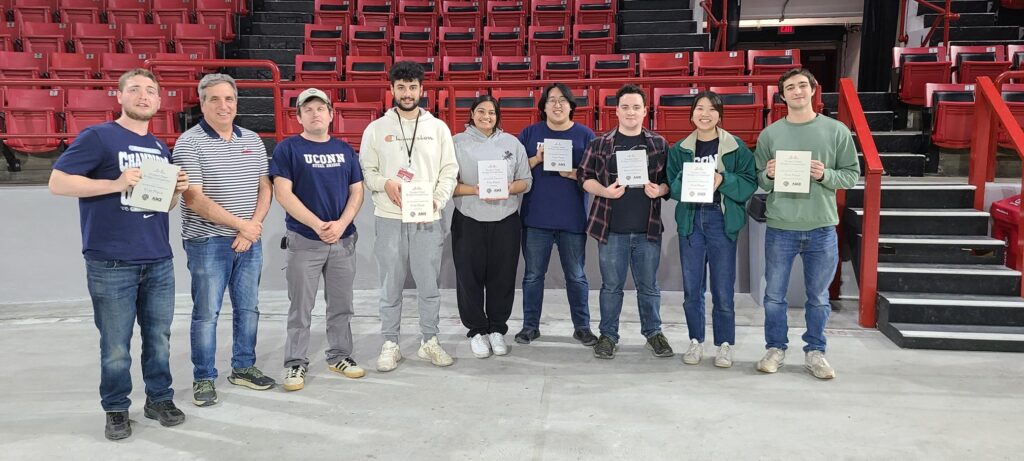
The Steel Bridge Design Club is a structural engineering club that deals with designing a bridge based on the specifications provided by the AISC for the national competition each year, based on certain specifications, such as meeting a height and length requirement.
"To name a few [specifications], there is a certain height that span needs to clear off the ground, the height and width of each member cannot exceed certain measurements, the length of the bridge that is required, where the posts need to be placed, and a bunch of others," Steel Bridge Design Club President Matthew Jewell said in an e-mail interview. "Then, we basically strategize a bridge that will help alleviate some of the harder rules, like this year there was a connection that needed to be in an area we cannot step in so the design was to make that connection easier. After that comes the basis of the design, so we chose a 3D space-truss since its aesthetic and can handle loading with a bottom chord."
On facing the challenges posed by this competition, Jewell said, "The challenges of this club really came down to putting a lot of man-hours in for fabrication, but our advisors and helper Tom were motivated to help us get this bridge done. Fabrication all started with prepping all the connection plates and taking apart some of the members from last year's bridge. Once all the prep work was finished, then the actual fabrication was simply put together with an assembled jig. The jig is what positioned each piece so that they resembled what they would eventually look like, and then the rest was welding and grinding so that the members were together at the correct dimension. It took a lot of time, but was not necessarily challenging. Testing was just stacking the 50 pound steel bars we have in the shop until it amounted to 2500lb in the worst loading case (mid-span), and doing that test helped the steel harden so it could perform better in the actual competition."
"The competition was definitely long," Jewell said. "The aesthetics judging started at 7AM, so the bridge needed to be assembled then. For us, we were fifth in line for the actual construction speed portion. Overall, we had a solid run with a 13:41 build time and only two drops. Our advisor was very impressed. We then brought the bridge over to the weigh station where it weighed around 250 lbs, and easily passed the deflection. The total deflection was about 1.4" over mid-span and .7" at the end span, amounting to 2.1" aggregate deflection. At the end, we were awarded first place for both construction speed and least deflection."
Competing members of the club included Jewell, John Santangelo, Kelly Voong, and Yuanlong Dai. They all shared the same role of building the bridge.
"This year the club did run a bit differently with Lexi's senior design team helping model the bridge into software, but the E-Board and I helped keep the club running. John, Yuanlong, and I were all E-board members while Kelly was actually part of the senior design team, so we all did different things before we became part of the build team," Jewell said.
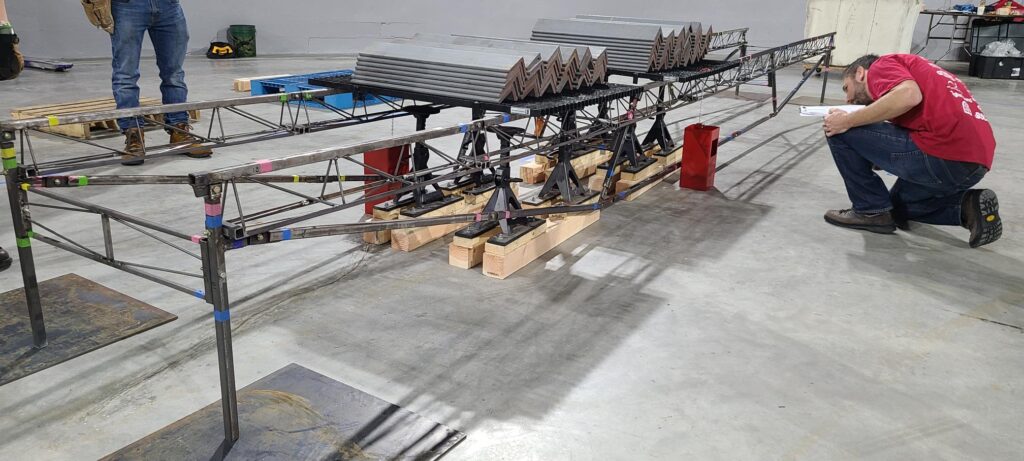
This year's bridge was 23 feet long, weighs 240 pounds and can support a 2500 pound load with 1 inch of deflection, according to Steel Bridge Design Club Advisor Michael Culmo. This bridge won all major categories in the event, including:
- Construction Speed
- Least Weight
- Stiffness
- Economy
- Structural Efficiency
- Overall Performance
The team now qualifies for the National Finals in San Diego in June, along with the top 50 teams in the country.
"[I] would definitely like to thank our advisors Mike Culmo and Lexi, as well as Tom Sawtelle who works with Mike at the CHA Companies. Mike has helped keep this club alive since the year 2000 and we are lucky to have such a knowledgeable professional be with us throughout the whole process. Tom also guided us in numerous occasions in welding tutorials and other shop practices, and we definitely wouldn't have done it without him."
The Steel Bridge Design Club posts regular updates on Facebook, and you can shoot them a follow on their Instagram account.
Author: New Center on Soil Research Addresses Industry Needs for Reliable Sensors
April 17, 2023
A group of UConn researchers from the School of Engineering and the College of Agriculture, Health and Natural Resources have recently established an industry-driven center for advanced soil science research as part of a collaborative SoilTech IUCRC Center project led by the University of Southern California.
The following text is from UConn Today:
"The UConn team includes Baikun Li, professor of civil and environmental engineering; Yu Lei, professor of chemical and biomedical engineering; Maria Chrysochoou, professor and department head of civil and environmental engineering; Haiying Tao, assistant professor of soil nutrient management and soil health; Sydney Everhart, associate professor and department head of plant science and landscape architecture; and Matthew Stuber, assistant professor of chemical and biomolecular engineering.
One of the defining aspects of the newly established Center for Soil Technologies (SoilTech) is that it will be driven by industry need through industry investment. After working to recruit industry partners over the past two years, the Center will now begin working on its first set of applied research questions."
The Center has already begun to make vital developments to address emerging soil health problems and urban farming in Connecticut.
"One of UConn’s chief contributions to this effort is the soil sensors developed by Li and Lei.
While there have been great advancements in sensor technology for biomedical applications and measuring water parameters in recent years, these sensors don’t work well when applied to soil.
'Normally, the reason a sensor that works well in the water does not work well in soil is because the soil is dry,' Li explains. 'And the ion contaminants that we target can’t migrate to the sensor.'
This makes it difficult for scientists to collect real-time soil measurements as they usually need to transport samples to a lab for analysis.
No one had been able to design an effective and affordable sensor for soil until Li created a sensor encased in hydrogel. The hydrogel effectively absorbs water from the soil, even when it is very dry. This allows the ions of interest, in this case nitrate and ammonium to move to the sensor so the sensor can collect an accurate reading."
Learn more at SoilTech, or read the full article on UConn Today.
Author: CEE Professor Featured on Vox
March 30, 2023
Our own Dr. Arash E. Zaghi was featured on a video by Vox discussing the misconceptions surrounding dyslexia, dispelling the stigma surrounding it as purely a "deficiency" and analyzing the strengths and advantages unique to neurodiverse individuals. As Dr. Zaghi says, "It doesn't make me superhuman... It's just how my brain structure is."
Dr. Zaghi was also recently inducted into the Connecticut Academy of Science and Engineering as one of eleven inductees from UConn. The following text is from UConn Today:
“As UConn’s academic and innovative influence grows, so does our faculty membership in CASE. That’s not a coincidence,” says Pamir Alpay, a CASE member and UConn’s interim vice president for research, innovation, and entrepreneurship. “UConn and UConn Health research forms Connecticut’s scientific and engineering backbone and it’s an honor to see our faculty recognized for their brilliance and accomplishments.”
Check out the full video on YouTube below:
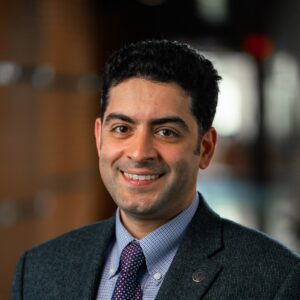
Dr. Arash Zaghi pictured above.
Author: Great Minds Don’t Think Alike: CEE INCLUDE Neurodiversity Campaign
The CEE INCLUDE project is excited to announce the Great Minds Campaign!
ADHD, autism, dyslexia and other forms of neurodiversity often come with strengths that may not be acknowledged or recognized. The Great Minds Campaign aims to break the stigma related to neurodiversity and highlight the many strengths and talents that neurodiverse/neurodivergent people bring to the table. Join the campaign and share your neurodiverse strengths with the world!

Scan the QR Code above, or use the attached link to join the campaign and share your strengths!
Author: WIMSE Events: Negotiation for Women in STEM
March 18, 2023
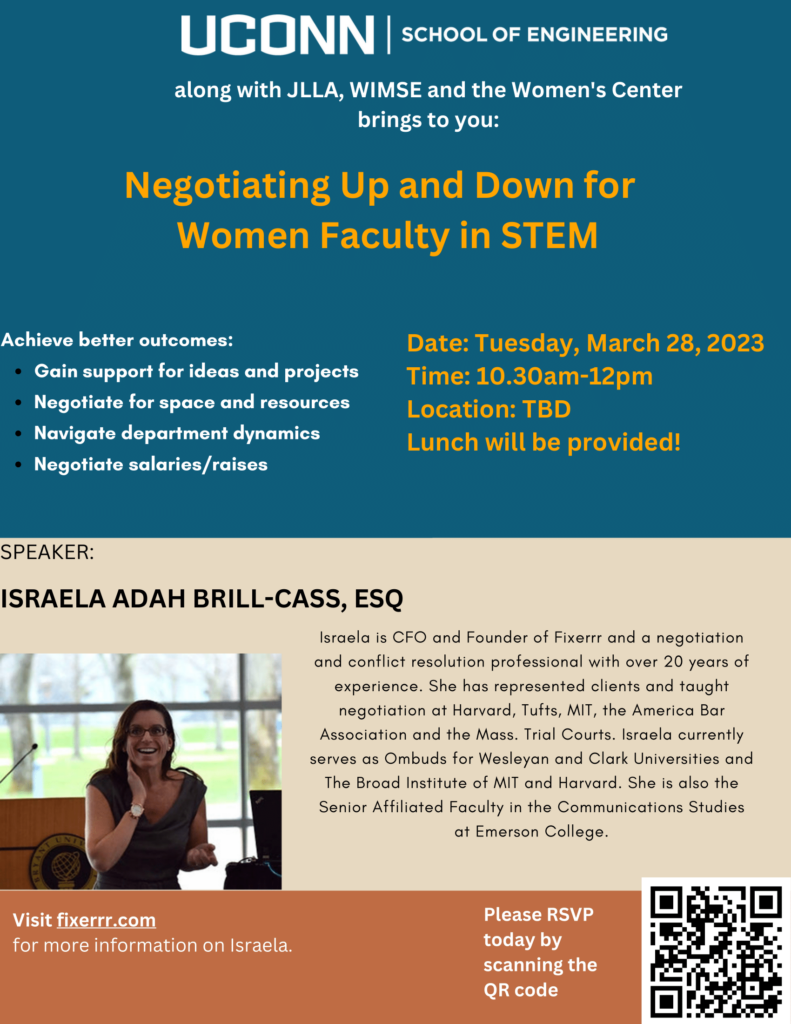
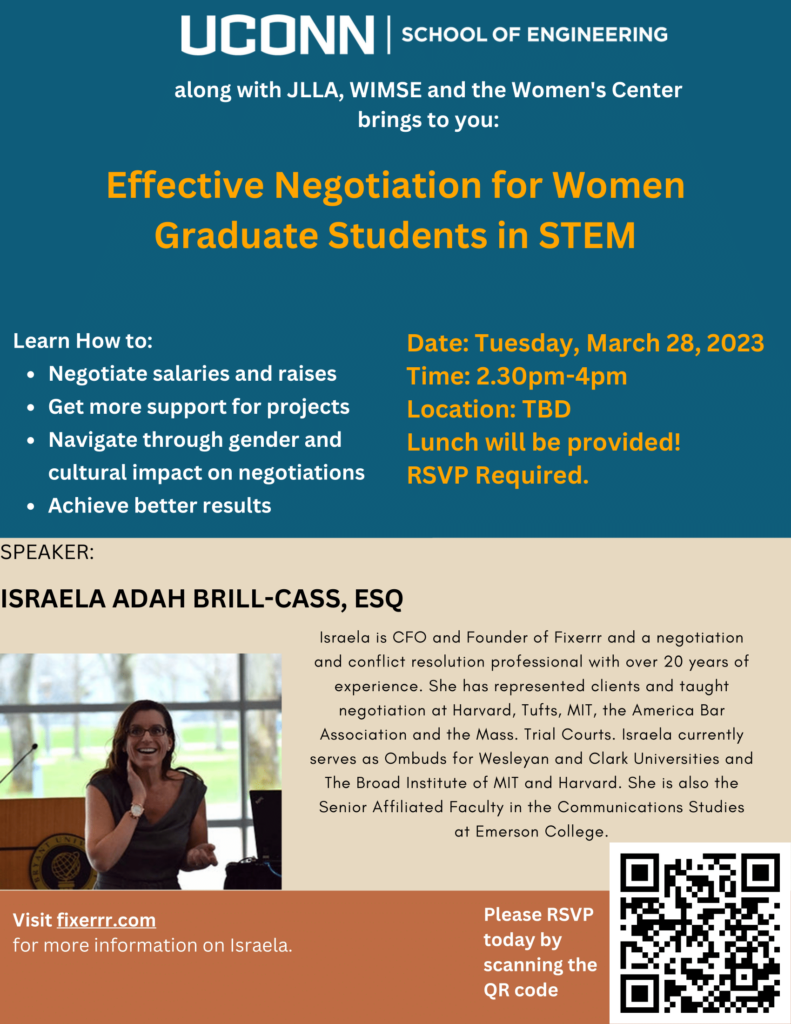
The UConn School of Engineering along with JLLA, WIMSE and the Women's Center would like to announce two workshops dedicated to understanding how to negotiate for women in STEM. Both workshops will take place on Tuesday, March 28. Location TBD.
Negotiating Up and Down for Women Faculty in STEM will take place from 10:30am to 12pm. Women faculty members may attend to learn how to:
- Gain support for ideas and projects
- Negotiate for space and resources
- Navigate department dynamics
- Negotiate salaries / raises
Effective Negotiation for Graduate Students in STEM will take place from 2:30pm to 4pm. Women graduate students may attend to learn how to:
- Negotiate salaries and raises
- Get more support for projects
- Navigate through gender and cultural impact on negotiations
- Achieve better results
Both workshops will feature guest speaker Israela Adah Brill-Cass. Israela is CFO and Founder of Fixerrr and a negotiation and conflict resolution professional with over 20 years of experience. She has represented clients and taught negotiation at Harvard, Tufts, MIT, the America Bar Association and the Mass. Trial Courts. Israela currently serves as Ombuds for Wesleyan and Clark Universities and The Broad Institute of MIT and Harvard. She is also the Senior Affiliated Faculty in the Communications Studies at Emerson College.
Visit fixerr.com for more information on Israela.
RSVP now by scanning the QR codes on the posters. We hope to see you there!
Author: CEE Student Presents at Annual TRB Meeting
February 10, 2023
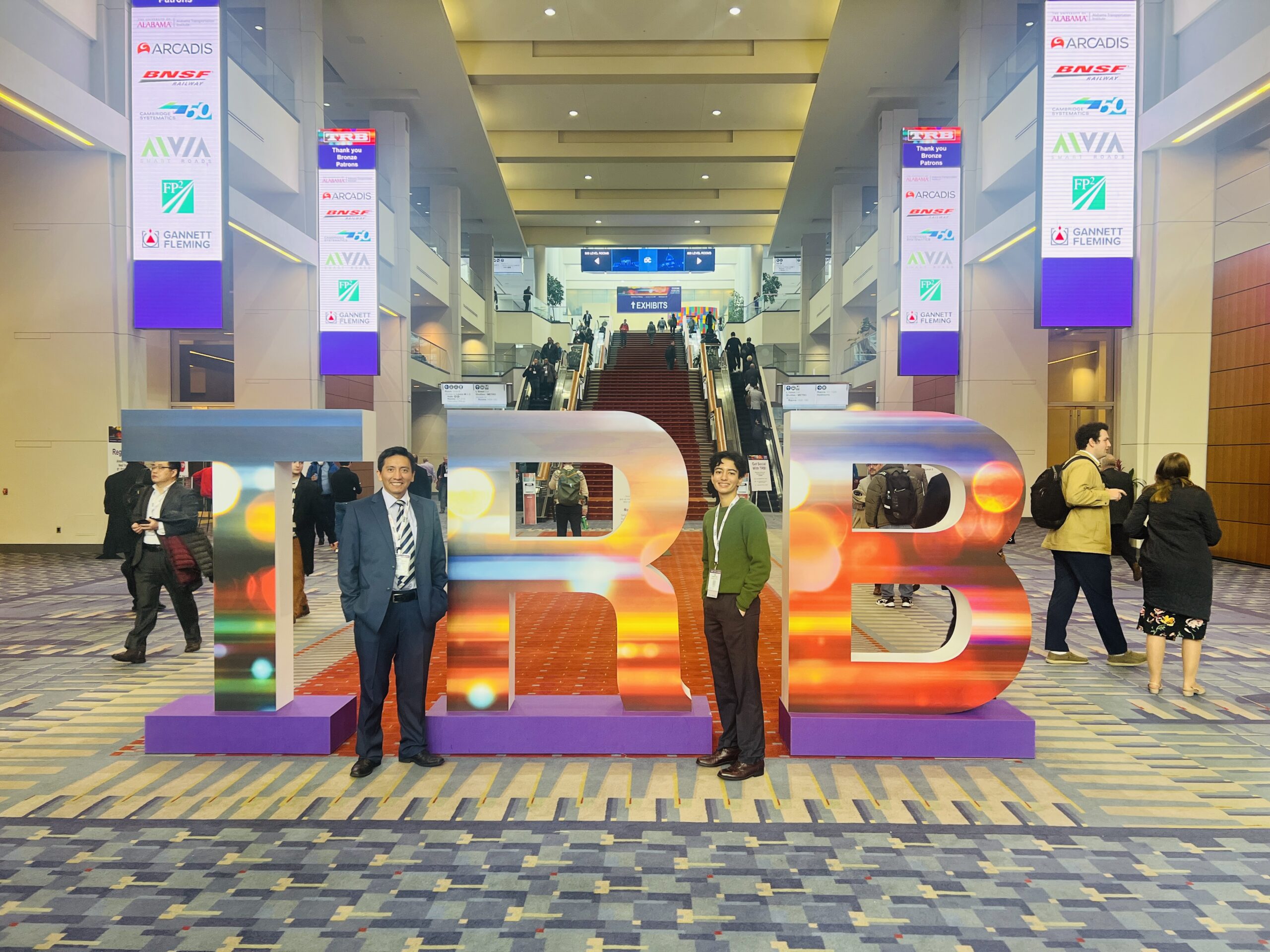
From January 8 to 12, 2023, the Transportation Research Board (TRB) held its 102nd Annual Meeting in Washington, D.C, where policy makers, administrators, practitioners, researchers, and representatives of government, industry, and academia alike confer to share research in the transportation field. We would like to congratulate Leo Gamez, a Class of 2024 undergraduate student and fellow of the CEE Undergraduate Research Initiative, for his work in this conference.
Leo is currently pursuing a dual degree in Civil Engineering and Latino & Latin American Studies, as well as a minor in Urban & Community Studies. His work, which was focused on transportation equity and how it is associated with metrics of derivation in Latin America, was especially aligned with this year's conference theme: Rejuvenation Out of Disruption: Envisioning a Transportation System for a Dynamic Future, which emphasized that transportation is a substantial enabler or barrier to social exclusion and that adequate access to opportunities (health, education, jobs, among others) is critical to reducing inequity in urban areas. This culminated in Leo's presentation topic of "Assessing the Association of a Metric of Transport Equity and Social Deprivation: A case study in Peru."
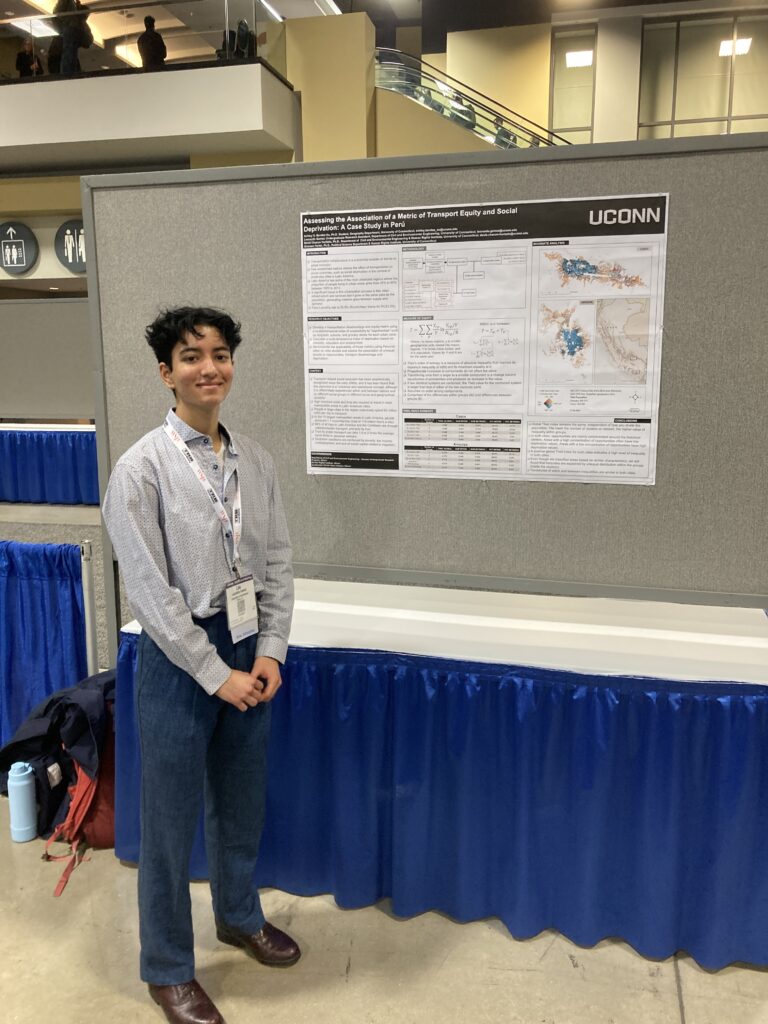
Leo's work is also part of the Engineering for Human Rights Initiative in collaboration with Ashley G. Benítez, Ph.D. student in Geography, and under the direction of Profs. Davis Chacón Hurtado (Assistant Research Professor in CEE and Human Rights Institute) and Shareen Hertel (Professor of Political Sciences). As next steps, Leo will continue working with them to develop a multi-dimensional index of social deprivation and transportation equity for different cities in Peru and co-author a manuscript with the results.
"Transportation infrastructure is a substantial enabler or barrier to social inclusion. However, few established metrics assess the effect of transportation on social outcomes, such as social deprivation in the context of small-size cities in Latin America," Prof. Chacón Hurtado said. "Leo is collaborating on a project to develop a metric of transportation equity and how it is associated with broader economic and social outcomes in cities."
About The TRB:
The Transportation Research Board (TRB) is a division of the National Academy of Sciences, Engineering, and Medicine, and aims to provide "leadership in transportation improvements and innovation through trusted, timely, impartial, and evidence-based information exchange, research, and advice regarding all modes of transportation." (Source: https://www.nationalacademies.org/trb/about )
The Annual Meeting convenes thousands of people (transportation administrators, practitioners, policymakers, and researchers). This year, Secretaries of Transportation, Buttigieg, and Energy, Granholm, were part of the conference (See more: https://www.nationalacademies.org/news/2023/01/secretaries-of-energy-and-transportation-discuss-getting-to-net-zero-in-u-s-transportation-during-trbs-2023-annual-meeting )
About CEE Undergraduate Research and Innovation Program:
The Department of Civil and Environmental Engineering's Undergraduate Research and Innovation Program provides undergraduate students with the opportunity to gain valuable work experience while exploring their areas of interest in research. Learn more about it here: https://cee.engr.uconn.edu/undergraduate/undergraduate-research-and-innovation
About Engineering for Human Rights Initiative: The Engineering for Human Rights Initiative (EHRI) is a collaborative venture between UConn's School of Engineering (SoE) and the Human Rights Institute (HRI) that addresses human rights implications of the most significant challenges in engineering and technology in six key research areas: 1) Water, Health & Food Security; 2) Product Design, Manufacturing, and Supply Chain Management; 3) Community Planning, Resilience and Justice for a Changing Environment; 4) Engineering Education and Accessibility Rights; 5) Engineering Substances and Process Sustainability; and 6) Cybersecurity, Privacy, and Human Vulnerability. To learn more, please click here: https://engineeringforhumanrights.initiative.uconn.edu/
Author: Promising Practices for Addressing the Underrepresentation of Women in Science, Engineering, and Medicine
The following text is from National Academies:
"Careers in science, engineering, and medicine offer opportunities to advance knowledge, contribute to the well-being of communities, and support the security, prosperity, and health of the United States. But many women do not pursue or persist in these careers, or advance to leadership positions - not because they lack the talent or aspirations, but because they face barriers, including: implicit and explicit bias; sexual harassment; unequal access to funding and resources; pay inequity; higher teaching and advising loads; and fewer speaking invitations, among others.
There are consequences from this underrepresentation of women for the nation as well: a labor shortage in many science, engineering, and medical professions that cannot be filled unless institutions and organizations recruit from a broad and diverse talent pool; lost opportunities for innovation and economic gain; and lost talent as a result of discrimination, unconscious bias, and sexual harassment.
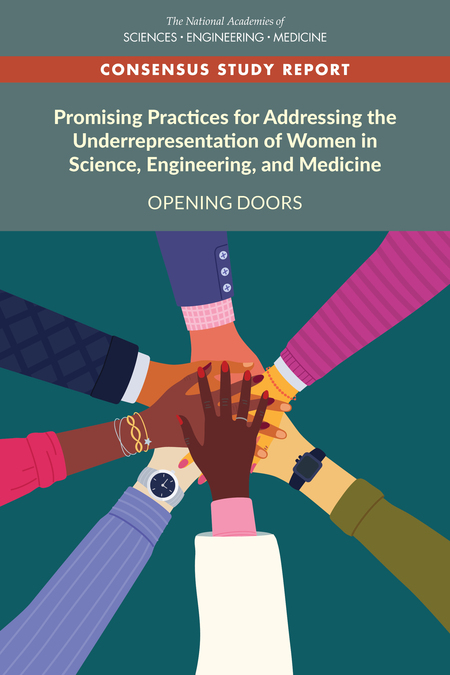
Promising Practices for Addressing the Underrepresentation of Women in Science, Engineering, and Medicine reviews and synthesizes existing research on policies, practices, programs, and other interventions for improving the recruitment, retention, and sustained advancement into leadership roles of women in these disciplines. This report makes actionable recommendations to leverage change and drive swift, coordinated improvements to the systems of education, research, and employment in order to improve both the representation and leadership of women."
Download the free PDF file or read for free online at National Academies.
Author: The Impacts of Racism and Bias on Black People Pursuing Careers in Science, Engineering, and Medicine
The following text is from National Academies:
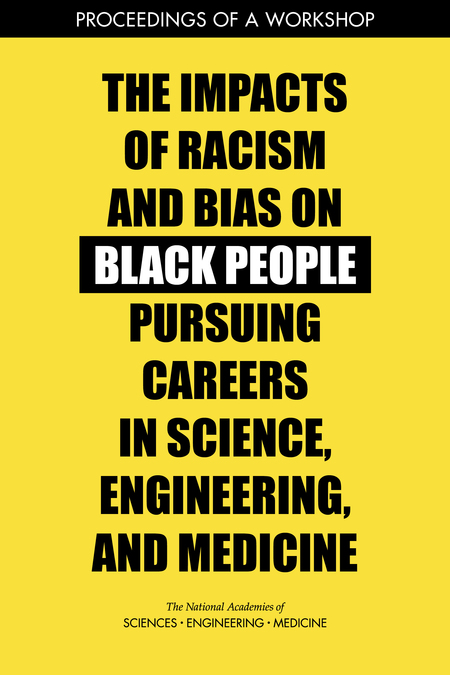
"Despite the changing demographics of the nation and a growing appreciation for diversity and inclusion as drivers of excellence in science, engineering, and medicine, Black Americans are severely underrepresented in these fields. Racism and bias are significant reasons for this disparity, with detrimental implications on individuals, health care organizations, and the nation as a whole. The Roundtable on Black Men and Black Women in Science, Engineering, and Medicine was launched at the National Academies of Sciences, Engineering, and Medicine in 2019 to identify key levers, drivers, and disruptors in government, industry, health care, and higher education where actions can have the most impact on increasing the participation of Black men and Black women in science, medicine, and engineering.
On April 16, 2020, the Roundtable convened a workshop to explore the context for their work; to surface key issues and questions that the Roundtable should address in its initial phase; and to reach key stakeholders and constituents. This proceedings provides a record of the workshop."
Download the free PDF file or read for free online at National Academies.
Author: CEE Graduate Student Accepted for DDETFP: Interview with Genevieve Rigler
January 29, 2023
The CEE Department would like to congratulate civil engineering graduate student Genevieve Rigler for being accepted into the 2023 Dwight David Eisenhower Transportation Fellowship Program (DDETFP), a prestigious fellowship for graduate students focusing on transportation engineeering.
Rigler is a doctoral student pursuing mixed methods to investigate socio-economic impacts of historic infrastructure/development policies that have exacerbated social stratification, hindered intergenerational wealth-building and caused externalities in the health, education and well-being domains.
We have asked Genevieve a few questions about her work with Dr. Davis Chacon-Hurtado and the Human Rights Institute, as well as her journey in transportation and environmental engineering.
What kind of research are you conducting with Dr. Davis Chacon-Hurtado and the HRI?
"My work with Dr. Davis Chacon-Hurtado and the Human Rights Institute has been focused on building a knowledge base at the intersection of civil infrastructure and equity, particularly in the domain of transportation. Focusing on equity in transportation is a powerful way to get the pulse of a community’s well-being and quality of life. At its core, transportation enables access to opportunities. These opportunities include access to healthcare, education, healthy food, third places, and quality jobs. We are exploring the existing conceptualizations of equity in transportation policy and practice to gauge how the term is used, and ultimately, through an interdisciplinary approach , we aim to suggest an alternative that is both comprehensive and legible to engineering and planning disciplines.
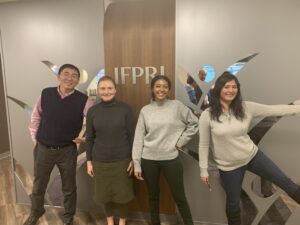
Rigler at her internship at the International Food Policy Research institute as part of her research with PIRE.
What we have found thus far is that, in many cases, the term equity is used broadly. As there is an increased focus on equity, as delegated under Executive Order 13985 and the Justice40 Initiative at the Federal level, it’s important to know what we mean when we refer to this term and the ideas it encompasses. Difficulties begin with defining equity, then it becomes more complex when deciding how to measure, quantify and monitor equity. Without a benchmark, or a way to measure changes in equity, it’s hard to justify investments and policy efforts towards increasing well-being for individuals and communities."
How has your experience as a PhD student at UConn prepared you for this fellowship?
"The research I’m doing for my Ph.D. and the Dwight David Eisenhower Transportation Fellowship program (DDETFP) focuses on investigating the housing-energy-transportation nexus in the wake of a major energy transition. Maintaining the cost of a car, in addition to the expenses associated with energy needs and housing, is a major burden for many households in Connecticut; these three basic needs account for 49% of household incomes statewide. For low-income households, the energy burden was six to seven times higher, as were costs for transportation, according to the same study.
To do this, I’m working on ways to quantify the benefits and the costs to households, individuals and communities, and where these are distributed. I plan to investigate historical policies that may answer the question of how we have arrived here. That body of work would target a side of justice that is receiving less attention, restorative justice. I was deeply moved recently during a trip to Vermont where I came across a research expo titled Interpreting the Interstate Highway System (IHS). It captured various stories of local families, businesses and farmers during the construction of the IHS through Vermont. There was a poster sharing that a farmer was going to be forcefully removed from his home, since he wouldn’t leave voluntarily and refused to leave the land that had been passed down three generations in his family. That same night, he entered his barn, locked himself inside and set the barn into flames. The quote on the poster was from his wife, “No one ever said sorry,” it read. The impact of infrastructure on the social and economic capital of communities, especially vulnerable communities, has been the focus of recent research efforts (see, for example, NCHRP 08-162).
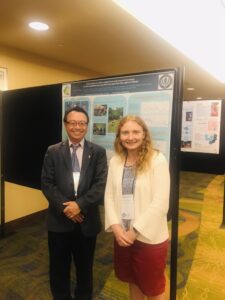
Rigler (right) presenting a PIRE presentation at a water conference.
I argue that restorative justice is an integral piece in the dialogue of communities adopting new technology (solar panels, electric vehicles etc.,). There’s a lot of research that focuses on trust in communities. When I read research on trust-building, I wonder, has trust-worthiness first been demonstrated? To that end, first, we must look at what has been to prepare better and to prepare differently during this energy transition for what could be different. History has a way of repeating itself, and I aim with my work to investigate new policy pathways to be thoughtfully considered by individuals, communities and policy makers. It’s important for people to feel they have a choice in their future and the future of their communities.
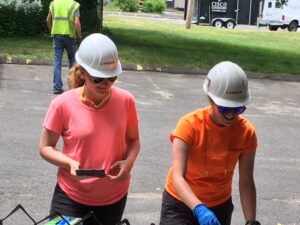
Rigler at an environmental consulting internship in New Haven, CT
I would be remiss to not mention that many of these ideas began when I received the Congress Bundestag Youth Exchange Scholarship from the U.S. State Department in 2011-2012 and lived in former East Germany with a host family. That time was pivotal. I experienced a way of life that didn’t require a car. I saw people of all ages and capabilities engaged in their communities. More than anything, they believed their voice mattered. Upon returning to Connecticut, I didn’t find that people engaged in local politics, and more disturbingly, didn’t believe their voice was heard or that it mattered. This is integral in equity-related principles of engagement in processes and restoration.
My previous research includes investigating the experience of high school students who collected hydrological data in the Blue Nile Basin, Ethiopia (https://pire.engr.uconn.edu/) . In the end, we found that students were able to perceive an increase in their technical abilities and had built a stronger social network. In my research I argue that these two concepts, technical and social capacity, support the Sustainable Development Goals fundamentally. Ultimately, my thesis was published in a special issue in the Journal Sustainability earlier this year. (Citizen Science and the Sustainable Development Goals: Building Social and Technical Capacity through Data Collection in the Upper Blue Nile Basin, Ethiopia. Sustainability, 2022.)
Now, I serve as a reviewer for Citizen Science: Theory and Practice. It’s amazing that in one year I can go from submitting novel work, unsure if it was too radical, too new, too interdisciplinary to now be a reviewer and pursuing true interdisciplinary research as a PhD student at UConn."
Do you have any words for those who have helped you along the way?
"My unique journey wouldn’t be possible without all who invested their time, energy and resources in me. Thank you to Dr. Davis Chacon-Hurtado, my advisor, for sharing his incredible amount of knowledge and expertise in equity, transportation engineering and human rights.
Thank you to Dr. Elizabeth Holzer for encouraging and challenging me into deeper thought during her courses and our field visit to Ethiopia.
Thank you to Dr. Eleanor Shoreman-Ouimet for selecting me to work on her community resilience project this past summer; working with you in that experience and interviewing 30+ Public Works Directors across Connecticut was eye-opening and gave me a vision for the utility of my future work.
I thank Dr. Kathryn Libal and Dr. Emmanouil Anagnostou for allowing me to be the Graduate Assistant for the Engineering for Human Rights Institute and the Eversource Energy Center, and supporting my time here at UConn as a graduate student.
Thank you to peers and professors alike who lingered to chat with me after meetings, classes and conferences.
Last, but not least, I thank Dr. Zoi Dokou who was the catalyst into my research journey – it all started in her Fluid Dynamics class. It was five years ago, but I can still write Bernoulli’s equation on a napkin (though no one has asked me to) and remember the sense of belief she instilled in my research lens.
I am deeply moved that the U.S. Department of Transportation found merit in my work that focuses on restoration, trust-worthiness and a future that supports local democracy; this gives me great hope. I think that transportation systems reflect political priorities and we’re moving in the direction of understanding how public transportation makes our communities more resilient. This is seen in the increase in public transit investments in the Infrastructure Investment and Jobs Act. This is vital in the wake of climate extremes and energy transitions."
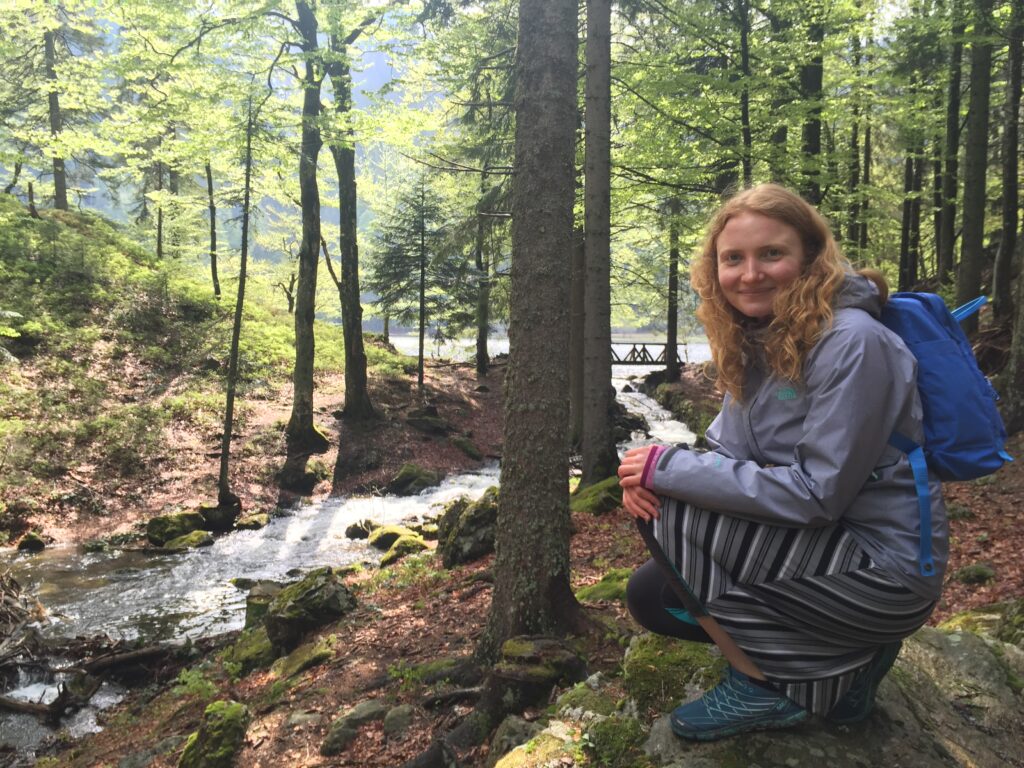
Rigler during a hiking trip in Black Forest while a EUROTech student studying sustainability and pedagogy at Albert-Ludwigs Universität Freiburg, Germany.