SoCEE Researchers Advance Energy Resilience Research
SoCEE Contributors

Board of Trustees Distinguished Professor
Director, Institute of Environment and Energy

Ph.D. Candidate, Environmental Engineering
As extreme weather events grow more frequent and intense, they increasingly occur in combination, creating compounding stresses on the nation’s power grid. New research from UConn’s Outage Prediction Modeling (OPM) team shows that these multi-hazard events influence both the frequency and duration of power outages across the United States.
Published in Nature Scientific Reports, the study is the first national-scale analysis to pair combined weather hazards with county-level outage data. UConn School of Civil and Environmental Engineering contributors include Environmental Engineering Ph.D. student Shah Saki and Board of Trustees Distinguished Professor Emmanouil Anagnostou, director of the Institute of Environment and Energy. They collaborated with Assistant Research Professor Giulia Sofia and Bandana Kar (National Laboratory of the Rockies) as part of the broader OPM team. A full overview of the work is also featured in UConn Today.
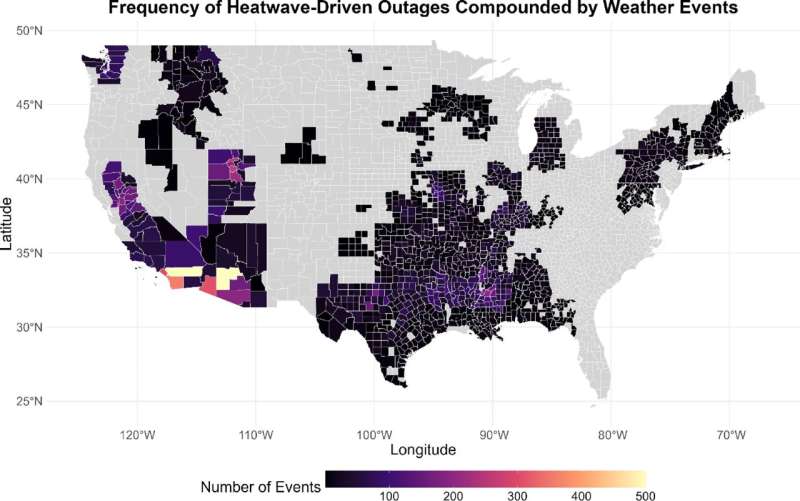
Why Heat Alone Is Not the Full Story
Heat has long been recognized as a major stressor on power systems. However, the team’s analysis shows that its effects intensify when interacting with additional hazards such as high winds, intense precipitation, or severe storms.
Accessing outage information can be difficult because utilities often do not share detailed outage records openly. This analysis was made possible through the U.S. Department of Energy’s Eagle-I system and a partnership with Oak Ridge National Laboratory, providing outage records from 2015 to 2022. Researchers paired those records with county-level weather data and National Weather Service alerts across the eight Independent System Operator regions in the contiguous United States. A condensed version of the findings is also available via PreventionWeb.
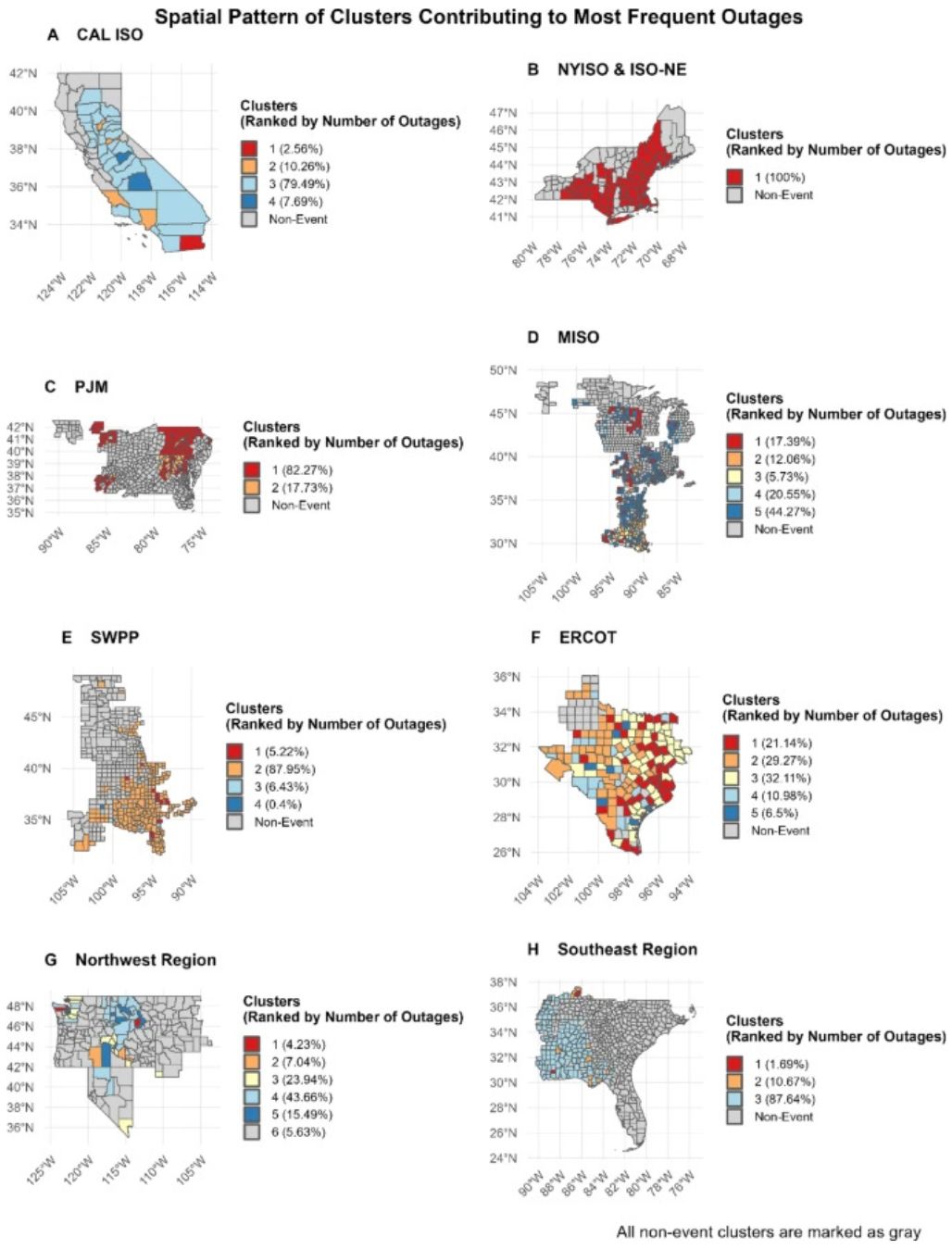
Using deep, unsupervised machine learning, the researchers developed self-organizing maps that cluster outages based on shared weather drivers. The automated clustering approach helps reveal patterns that can be overlooked when analyzing hazards in isolation, and supports clearer identification of the most frequent and most damaging combinations of events.
Regional Differences in Outage Risk
The findings demonstrate that outage dynamics differ significantly by region. In California, extreme heat is often compounded by high wind events and wildfire conditions. In Texas, heatwaves are frequently followed by intense rainfall. These combinations stretch grid systems beyond typical operating limits and increase outage likelihood.
Most outages were relatively short, but the study also documented rare, long-duration events. The median outage duration was approximately five hours, while the maximum outage duration reached 358 hours, nearly 14 days. One notable example was Hurricane Laura in August 2020, which was preceded by a multi-day heatwave and associated with prolonged service disruptions.
Implications for Energy Resilience
Rather than relying on one-size-fits-all national approaches, the study highlights the value of regionally tailored resilience planning, informed by local climate patterns and the hazard combinations most likely to strain the grid. The findings also reinforce the role of long-term investments in grid hardening as part of broader climate adaptation strategies.
Saki’s ongoing doctoral research continues to examine grid damage mechanisms and future climate scenarios to help inform forward-looking resilience planning.
Explore the research: Read the Study | Scientific Reports article | UConn Today story | PreventionWeb brief