CTI Received $1.97M to Advance Smart, Connected Transportation Safety
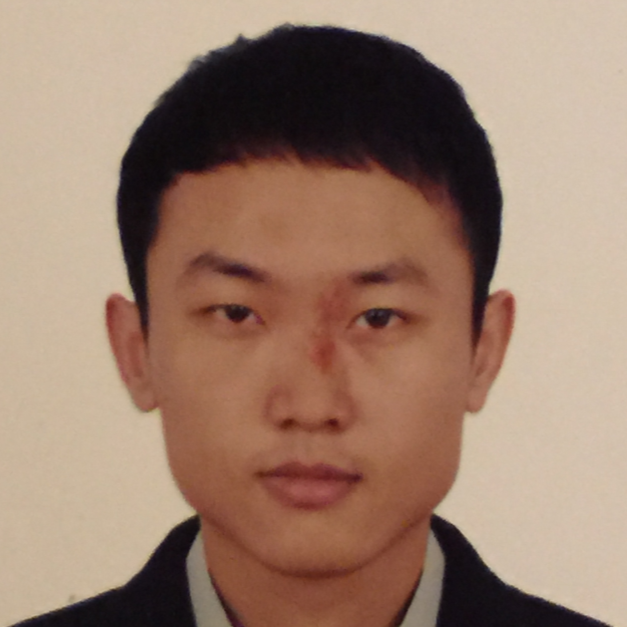
Assistant Research Professor and Project Manager,
Connecticut Transportation Safety Research Center
The School of Civil and Environmental Engineering is proud to announce that the Connecticut Transportation Institute has been awarded a $1.97 million grant from the U.S. Department of Transportation’s Safe Streets and Roads for All program. The three-year project (2025–2028) will strengthen data-driven pedestrian and bicyclist safety efforts on the Storrs campus by integrating artificial intelligence, 5G-enabled systems, and real-time analytics into transportation operations and safety analysis.
This award builds on CTI’s broader transportation safety efforts recently highlighted in UConn Today, which detailed $16.5 million in new grant funding supporting statewide traffic safety innovation. As noted in the coverage, CTI’s mission centers on leveraging emerging technologies to improve roadway safety across Connecticut, reinforcing the university’s commitment to protecting drivers, passengers, pedestrians, and bicyclists alike.
The Connecticut Transportation Institute (CTI) has been awarded a $1.97 million, three-year (2025–2028) grant through the U.S. Department of Transportation’s Safe Streets and Roads for All (SS4A) program to support technology-driven strategies that improve roadway safety. The award includes $1.58 million in federal funding and $390,000 in recipient cost share.
The project is led by Sean Vasington, Executive Director of University Planning, Design & Construction, who will serve as Principal Investigator. Dr. Kai Wang of CTI will serve as a Co-PI, leading the project’s modern technology and innovation efforts. Additional Co-PIs include Dr. Song Han and Dr. Yuan Hong from the School of Computing.
“I am truly excited to work with an interdisciplinary team of professors and experts from different agencies and schools to embed a variety of modern technologies into traffic operations and safety analysis. This award represents an important opportunity to bring together expertise in engineering, data science, communications, and public policy to develop innovative, technology-driven solutions that can meaningfully improve roadway safety. What excites me most about this work is the ability to translate advanced tools, such as AI, connected systems, and real-time analytics, into practical applications that protect pedestrians and bicyclists and create smarter, safer transportation systems for our communities.”Dr. Kai Wang, CTI Co-PI
Smart and connected campus prototype
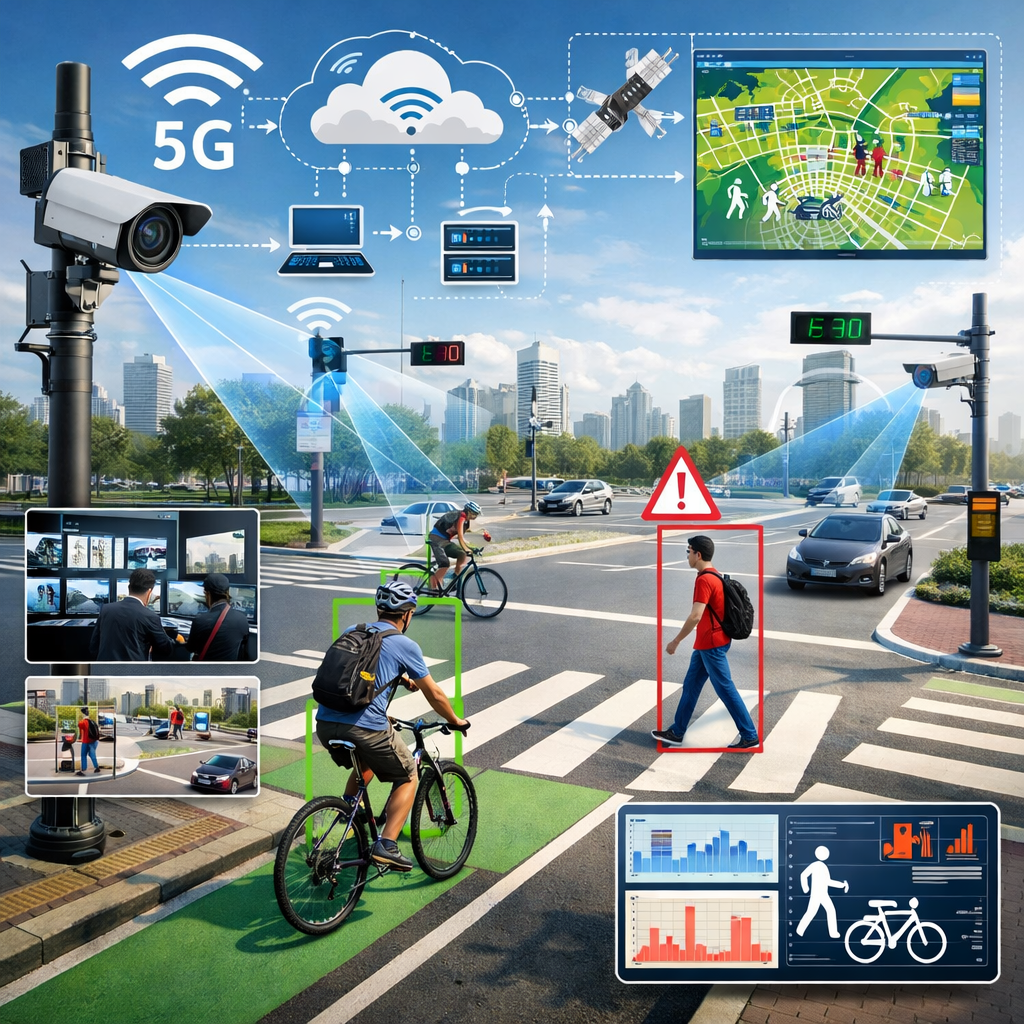
Central to Dr. Wang’s leadership role is the development of a smart and connected campus prototype at UConn focused on improving pedestrian and bicyclist safety. As part of the demonstration work, AI-enabled smart cameras will be installed at selected high-priority intersections to detect and classify pedestrians, bicyclists, and vehicles, track trajectories, and identify potential conflicts or near-miss events.
Using 5G connectivity, these intersection-level sensing systems will integrate into a centralized analytics platform to support low-latency data transmission and coordinated system management. The team will also develop a real-time monitoring dashboard that visualizes pedestrian and bicycle volumes, conflict indicators, near-miss heatmaps, and safety performance metrics across monitored intersections. This dashboard will support both operational monitoring and research analysis, helping stakeholders identify risk conditions, evaluate interventions, and track measurable safety improvements over time.
Planning integration and regional coordination
The project will update UConn’s Storrs campus Active Transportation Plan (ATP) by appending a Comprehensive Safety Action Plan (CSAP). The effort will be coordinated with the Capital Region Council of Governments (CRCOG) Comprehensive Safety Action Plan, supplementing the regional plan where applicable and strengthening the pathway for scalable safety improvements.
Grant highlights
- Award: $1.97M, three years (2025–2028)
- Funding: $1.58M federal, $390K cost share
- Program: USDOT Safe Streets and Roads for All (SS4A)
- Focus: AI + 5G-enabled sensing, real-time analytics, and safety demonstration projects
- Outcome: Actionable monitoring tools and planning updates to improve pedestrian and bicyclist safety
Long-term vision
Looking ahead, Dr. Wang emphasized the importance of cross-sector collaboration to advance transportation safety and translate research into real-world impact. His long-term goal is to help create a smart, resilient, and safe roadway network for all users across Connecticut by integrating advanced technologies, data-driven decision-making, and interdisciplinary expertise spanning engineering, computer science, analytics, public policy, planning, and behavioral sciences.
Learn more about this work and CTI initiatives on the UConn College of Engineering profile, Dr. Wang's personal website, and his LinkedIn.