Students Gain Firsthand Experience in New Site Visit Course
Throughout the fall semester, students in CE/ENVE 3995 Special Topics: Site Visit to CEE Industries stepped beyond the classroom to observe large-scale engineering projects at UConn and throughout Connecticut. Led by Professor Shinae Jang, the course introduced students to active construction sites, utility upgrades, state transportation operations, and research facilities shaping the region’s infrastructure. These visits offered students a closer look at the realities of engineering practice, career pathways, and the collaboration required to move complex projects forward.
Southwest Campus Upgrade and School of Nursing Construction
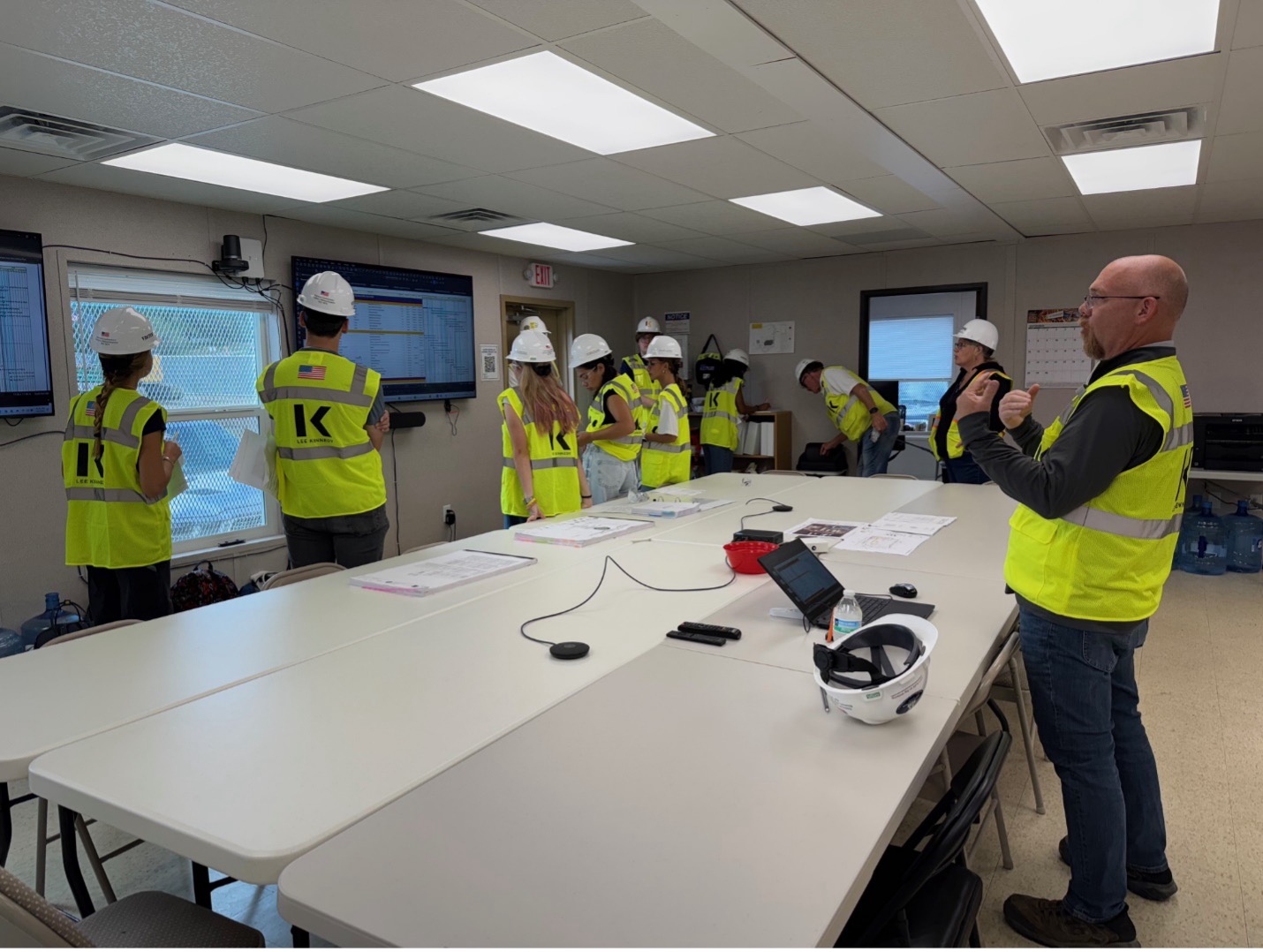 The semester began with a behind-the-scenes look at the new School of Nursing building and the Southwest Campus upgrade. Project managers walked students through construction sequencing, site coordination, and the discovery of subsurface challenges beneath the former parking lot. Students spoke directly with engineers representing multiple facets of the project, observing how teams communicate and make decisions in real time.
“My favorite part about the site visit was getting to speak to project manager and other managers that cover all facets of the site.”
Colin Veraszto
For environmental engineering majors, the visit connected directly to their academic interests. The team explained how swampland underneath the original pavement required extensive soil testing and remediation to stabilize the foundation for construction.
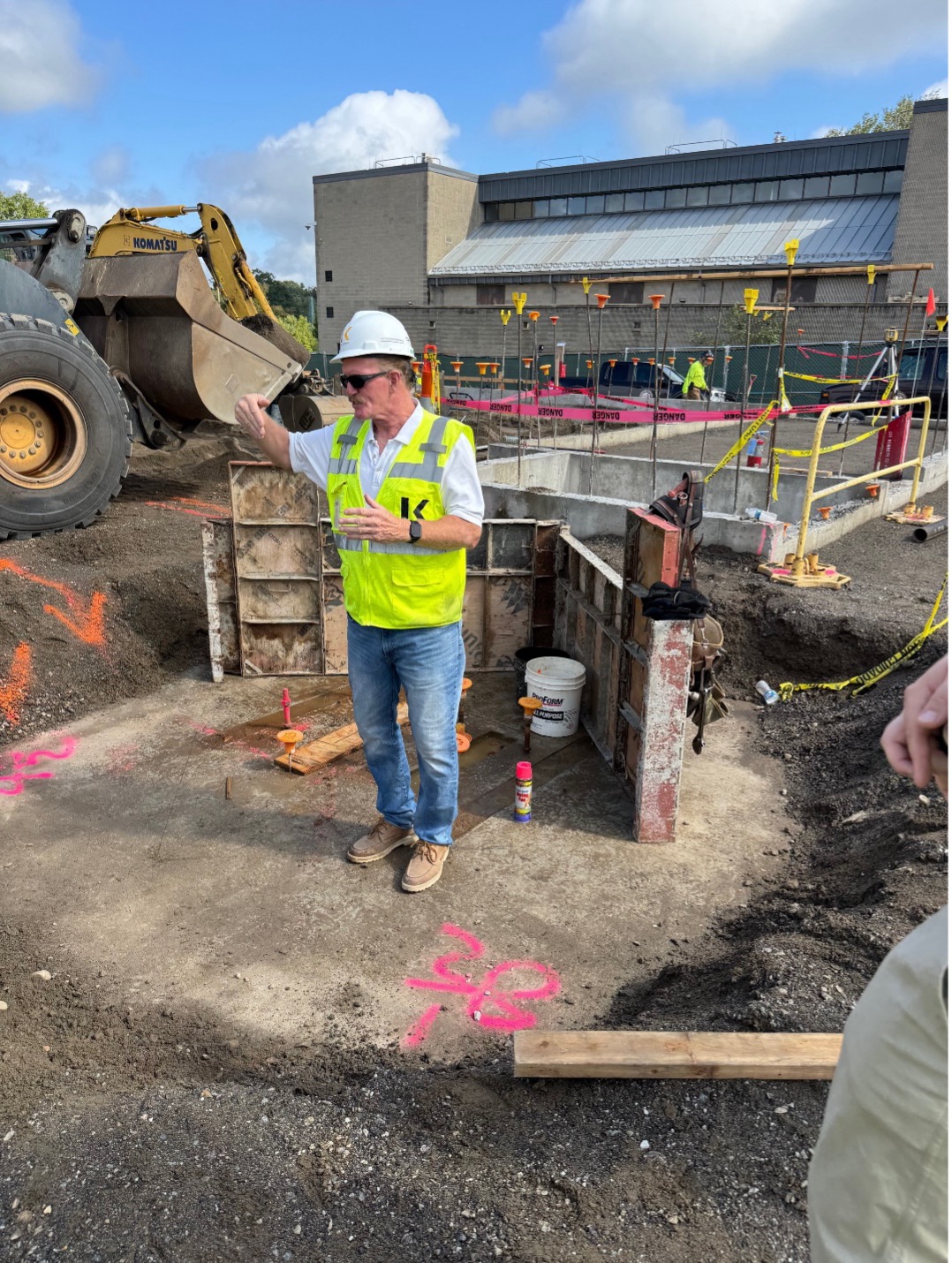
“This was potentially my favorite part of the visit since I am an ENVE, and soil remediation and testing closer aligns with my profession.”
Abaigeal Reynolds
Students also appreciated hearing from young professionals about their career paths. For many, these conversations made the work feel more tangible and helped them envision themselves on similar projects in the future.
“It was helpful to get advice from people who were once in our shoes.”
Julia Lengenfelder
Mirror Lake Restoration and Whitney Road Steam Improvements
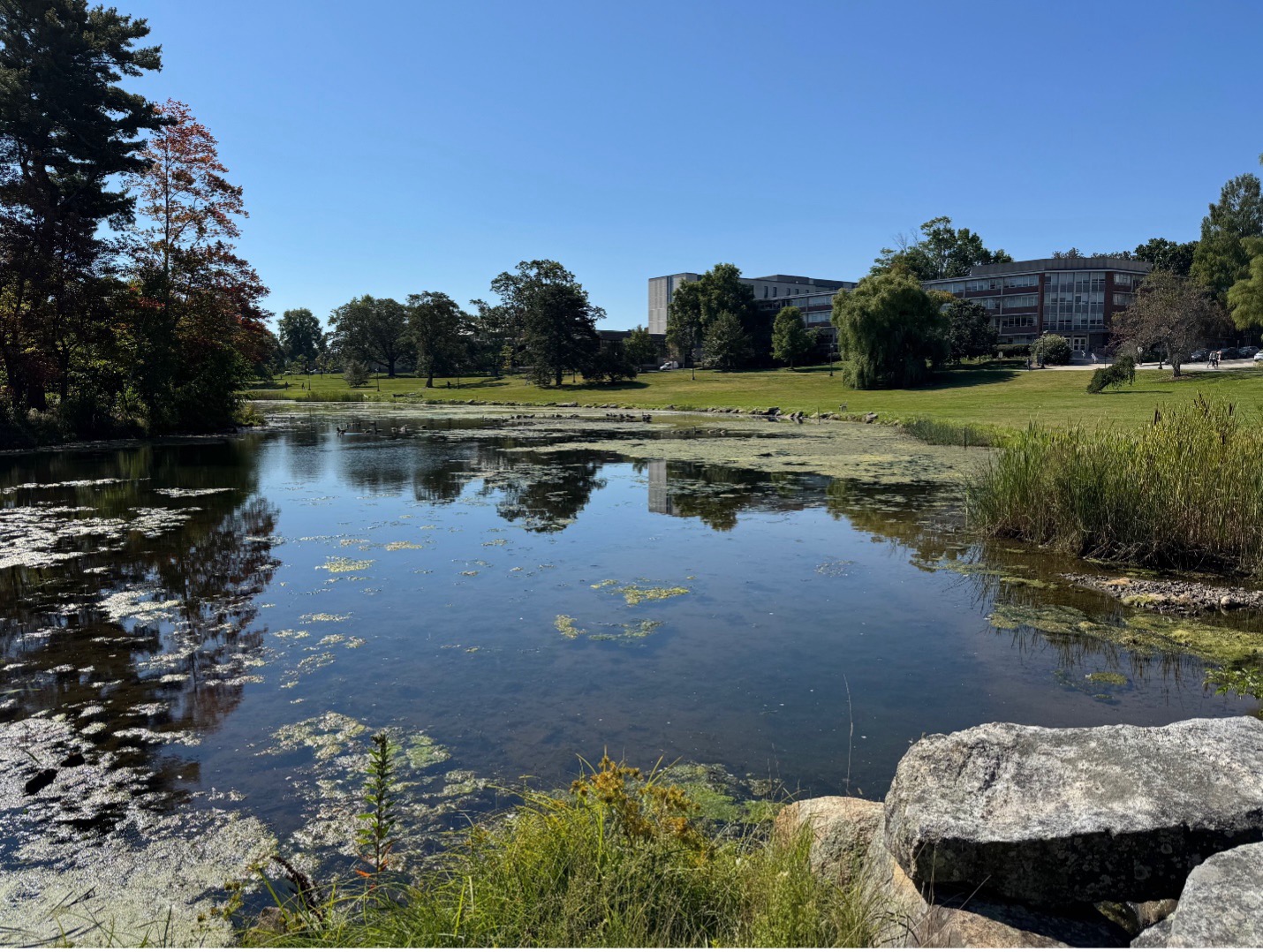
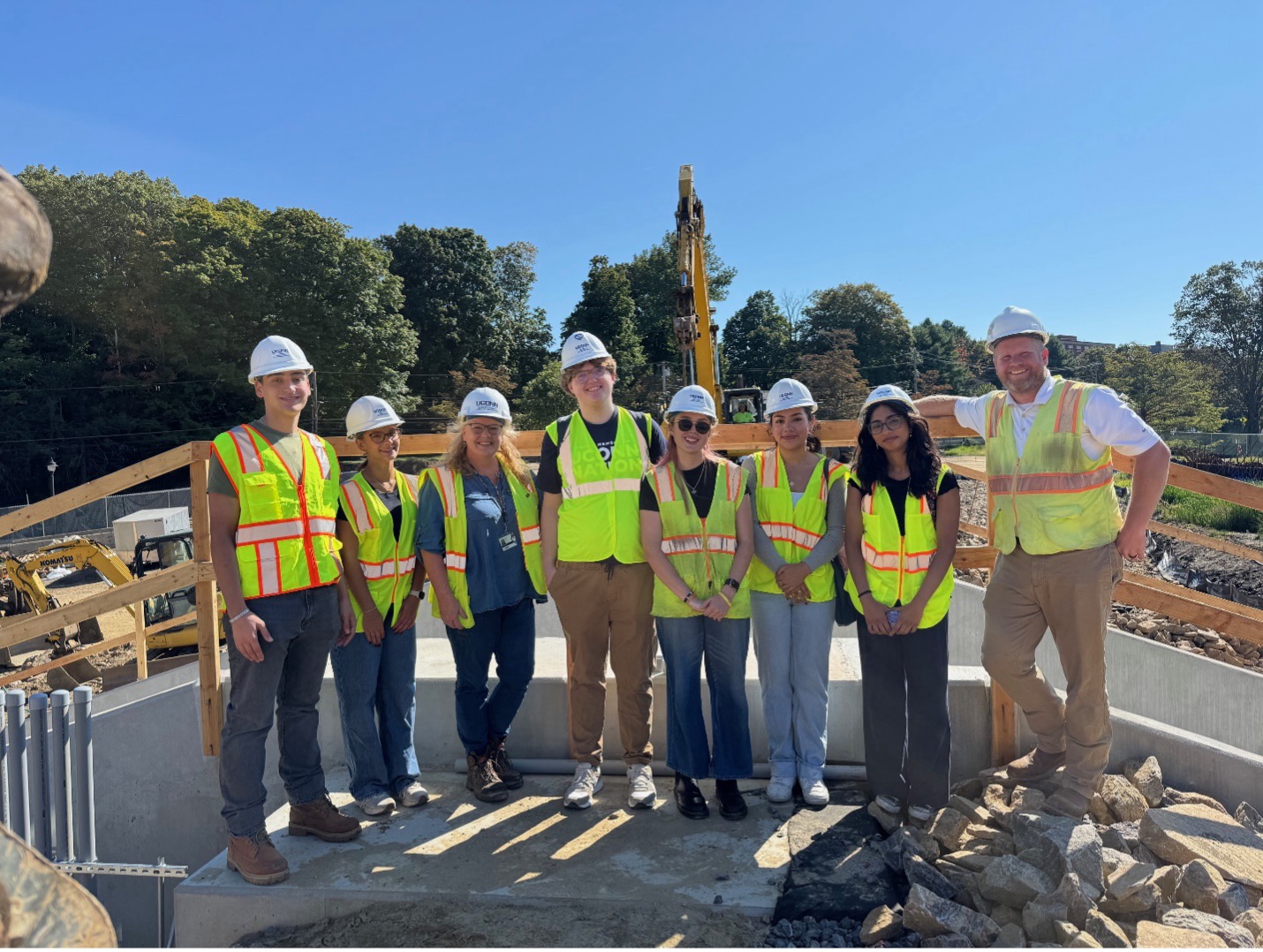 Students’ next stop was the expansive Mirror Lake Improvement Project, where UConn is replacing the century-old dam, stabilizing embankments, and reshaping the lake’s ecosystem. The class stood at the future dam site, learned about shifting safety standards, and saw how environmental considerations guide each phase of the redesign.
“My favorite part of the site visits was getting to stand on the location of the new dam being constructed.”
Colin Veraszto
Students were struck by how much campus infrastructure exists below ground. At the Whitney Road steam line replacement site, they learned how UConn distributes heat across campus and why modernization projects like this are essential to long-term energy reliability.
“I learned that UConn uses steam energy already being created by other energy sources.”
Julia Lengenfelder
For many, the visits deepened their appreciation for the scale of work required to maintain university infrastructure—particularly the unseen components supporting daily campus life.
“Even small engineering projects require lots of work and many different people have to work together.”
Brook Lambert
Exploring Statewide Engineering at the Connecticut Department of Transportation
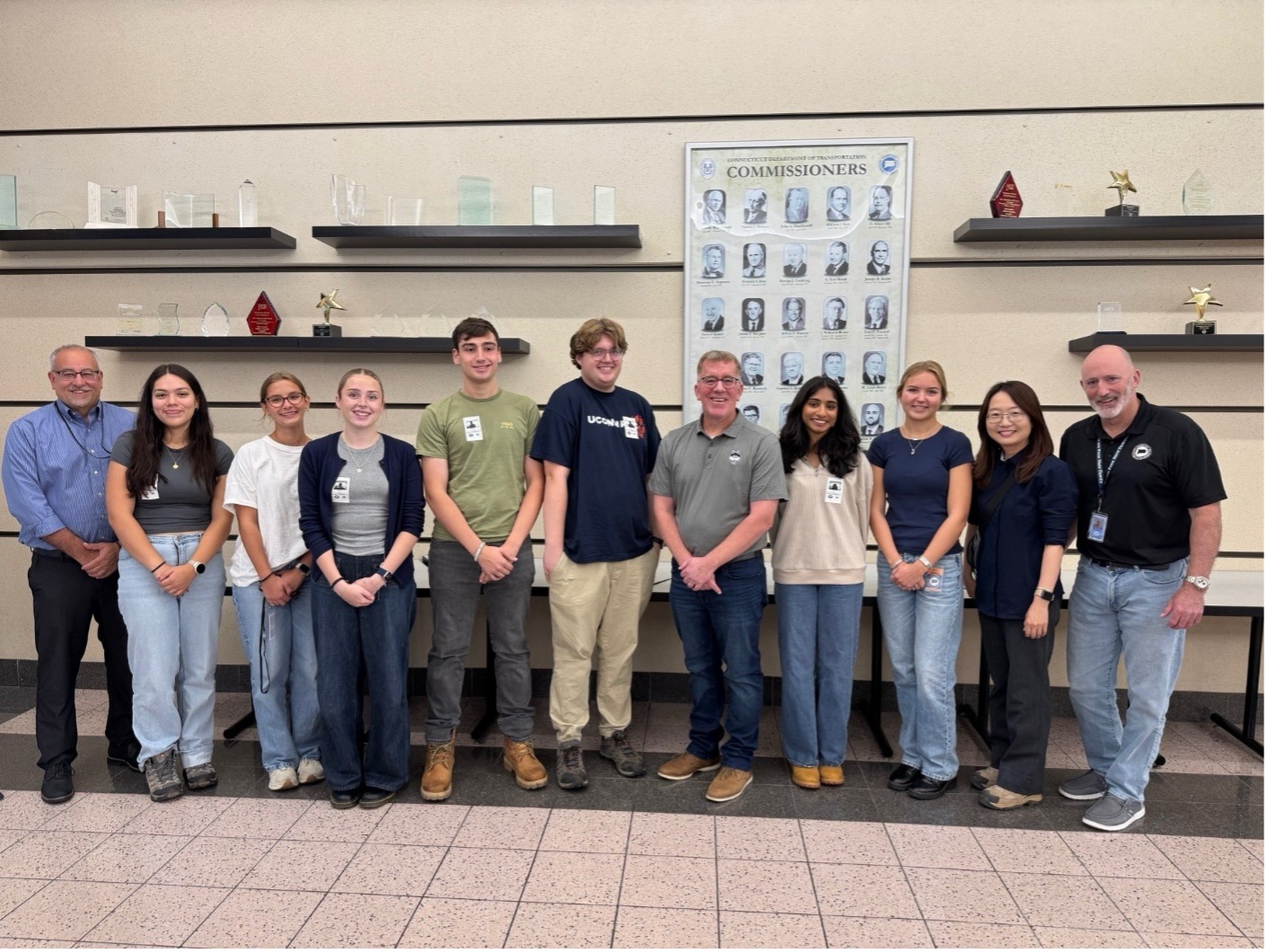 One of the most eye-opening experiences of the semester took place at the Connecticut Department of Transportation (CT DOT). Students toured highway work zones, learned about statewide planning, and spoke with engineers across divisions about bridge, roadway, and traffic operations. The visit highlighted the variety of opportunities available within the public sector and the direct impact transportation engineering has on communities statewide.
“The DOT has a lot of opportunities to try a lot of different things, like working on roads, highways, bridges, and a lot more.”
Kayla Balser
Standing inside an active highway work area gave students a unique perspective on safety considerations and the complexity of coordinating operations in live traffic conditions.
“My favorite moment was standing on the active highway work area and feeling the scale of the operation.”
Michael LaMagna
Inside the Gant Science Complex Reconstruction
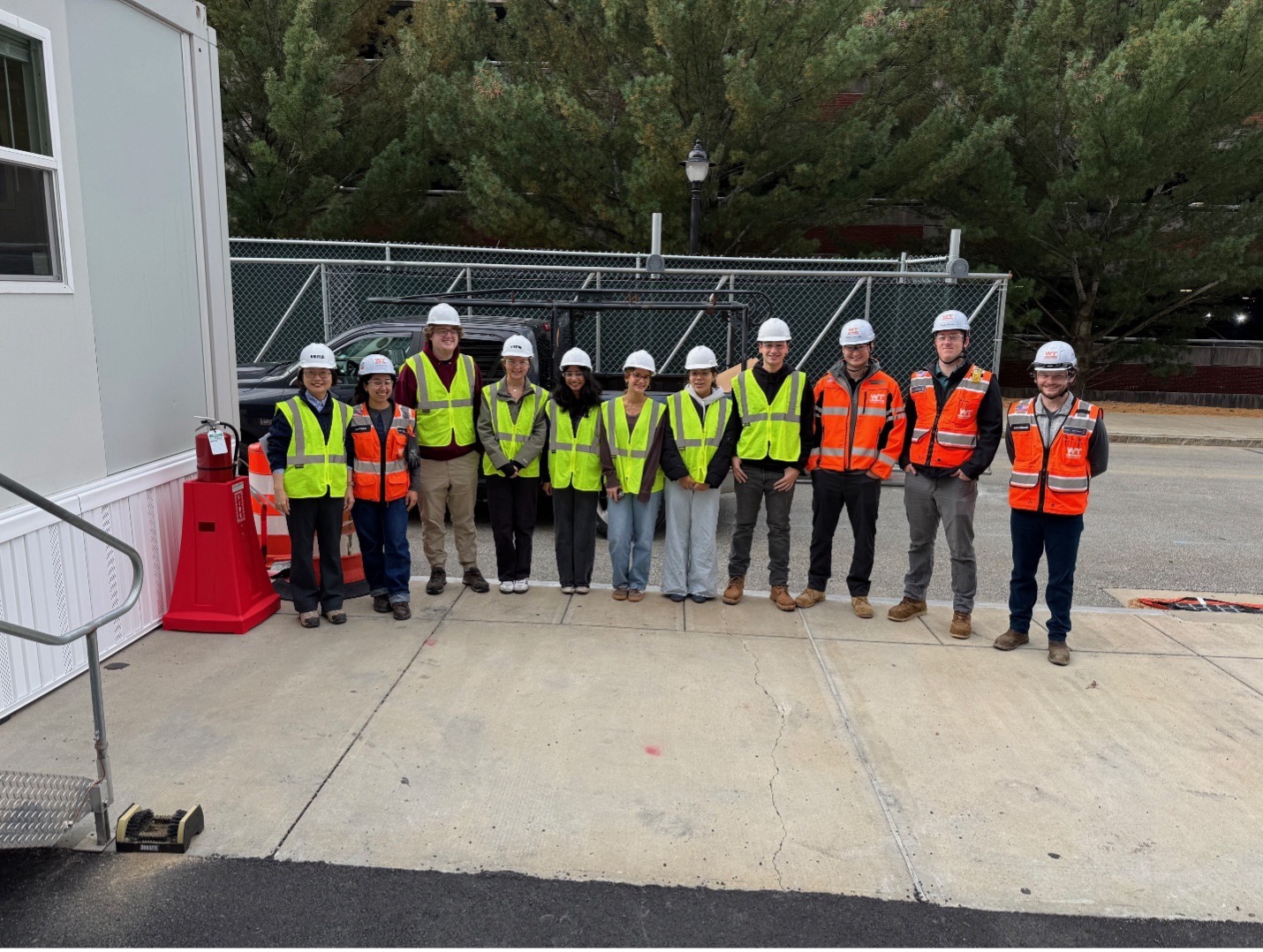 Students also toured Phase 3 of the Gant Science Complex renovation, one of UConn’s most significant long-term academic building projects. They observed the contrast between original spaces and fully renovated wings, and learned how asbestos removal, laboratory decommissioning, and phased construction allow operations to continue while upgrades progress.
“My favorite part of the site visit was walking through Gant and seeing the contrast between the older sections and the newly renovated parts of the building.”
Kayla Balser
The visit also highlighted the environmental components of the project, from hazardous materials management to modernizing lab infrastructure.
“We learned that since the building was old it had a lot of asbestos, and they had to remove it.”
Julia Lengenfelder
Learning Transportation Research at the Connecticut Transportation Institute
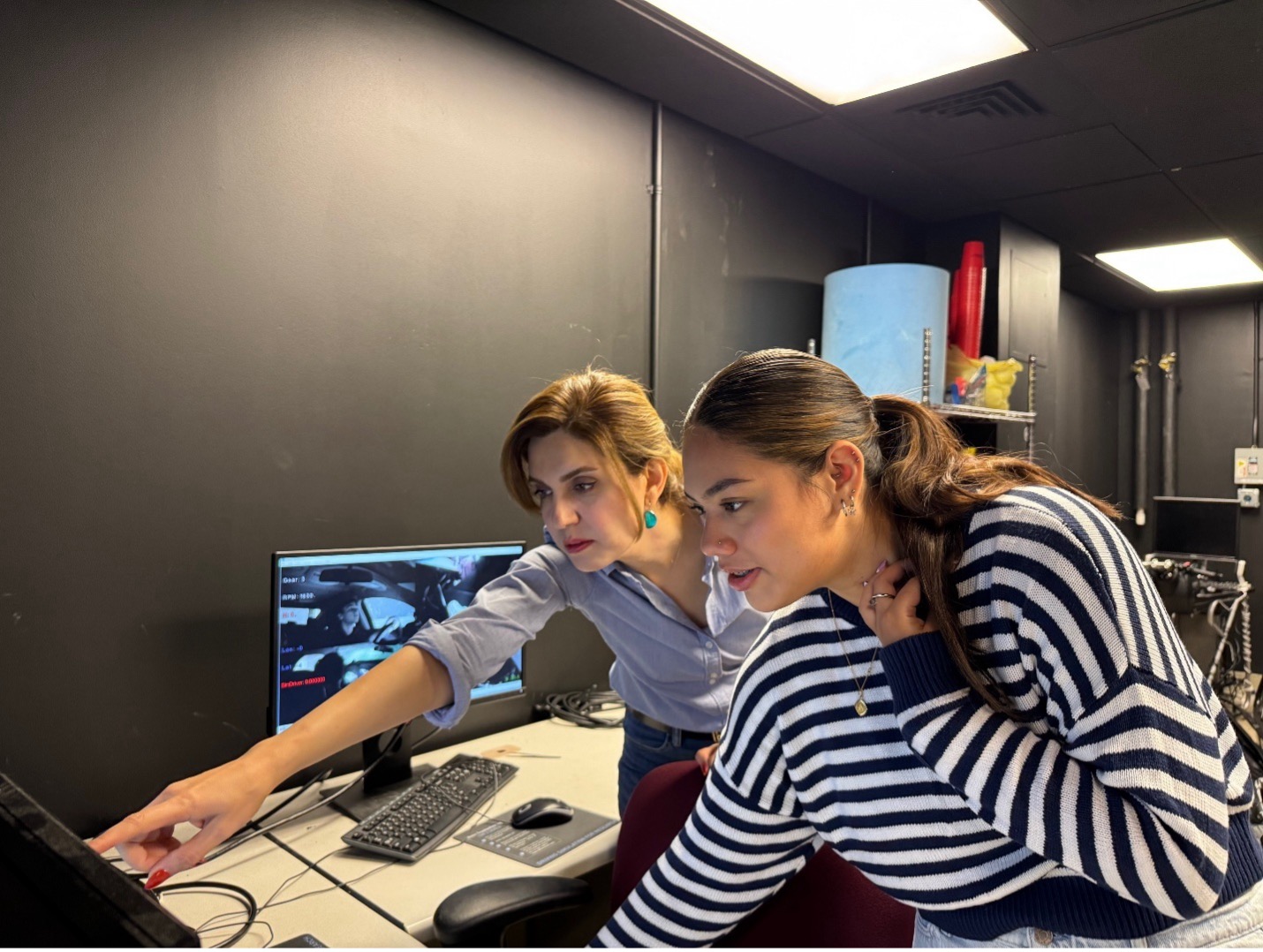 The final visit of the semester brought students to the Connecticut Transportation Institute (CTI), where they explored transportation research, roadway design considerations, and UConn’s immersive driving simulator. Students learned how engineers evaluate traffic flow, safety, and user behavior to guide transportation planning decisions.
“It was exciting to hear about all the technicalities and planning that went into designing the roundabout located near the Science 1 Research Center.”
Michael LaMagna
The driving simulator experience helped students connect classroom concepts to real-world design, highlighting how small changes in roadway design or control parameters influence driver decision-making.
“My favorite part was driving the simulator and seeing how changing the control room parameters affected the driving experience.”
Michael LaMagna
Across all site visits, students reported a deeper understanding of the field, greater confidence in pursuing engineering careers, and clearer insight into the collaboration required to bring major infrastructure projects to life. CE/ENVE 3995 continues to give students invaluable access to the people, processes, and decisions shaping Connecticut’s built environment.
Click here to read more SoCEE News: cee.engr.uconn.edu/about-us/news-archive