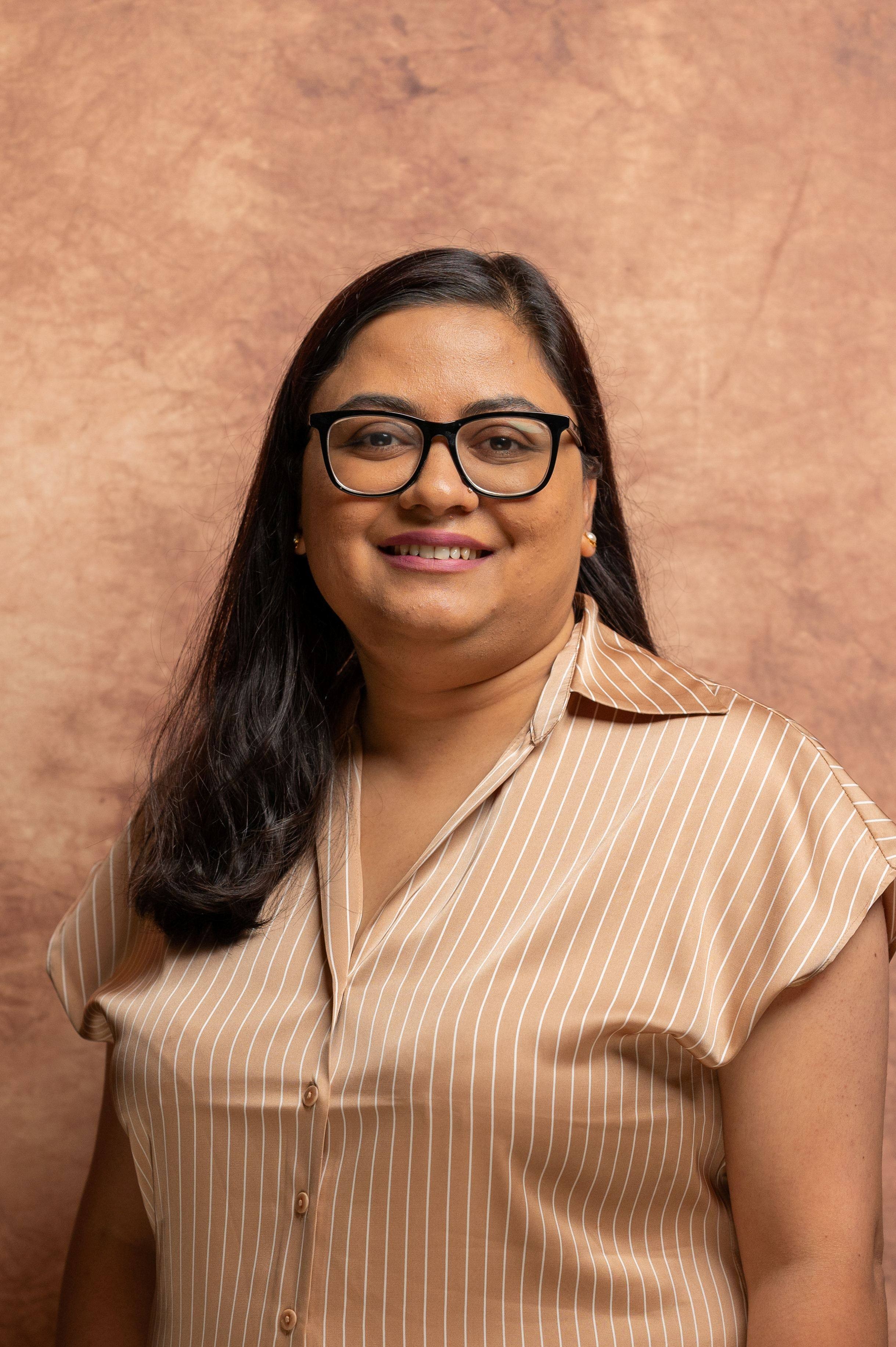
The School of Civil and Environmental Engineering is proud to congratulate Ph.D. student Aagya Dahal on being selected once again for the highly competitive Schlumberger Foundation Faculty for the Future Fellowship, marking her third consecutive year receiving the prestigious international award.
The Faculty for the Future Fellowship supports women from developing and emerging economies who are pursuing advanced research in science, technology, engineering, and mathematics (STEM) disciplines at leading universities around the world. The program aims to empower women scientists and engineers who are committed to advancing knowledge, innovation, and educational opportunities in their home countries and beyond.
For Dahal, receiving the fellowship for a third time is both a professional milestone and a meaningful affirmation of her work.
"Receiving the Schlumberger Foundation Faculty for the Future Award for the third time is a deeply meaningful honor," said Dahal. "To me, it represents not only recognition of my academic and research journey, but also a continued vote of confidence in my potential to contribute to science, engineering, and education. This award strengthens my commitment to advancing impactful research, supporting women and underrepresented voices in STEM, and using the opportunities I have been given to create meaningful change for the next generation of scholars and engineers."
Dahal's research focuses on advancing more sustainable and efficient concrete materials through the study of supplementary cementitious materials (SCMs) and their behavior in ultra-high-performance concrete (UHPC) systems. Her work investigates how chemically complex pore solutions influence the dispersion and performance of SCMs such as silica fume, fly ash, recycled glass powder, and limestone powder.
By examining how these materials interact within low-water UHPC systems, Dahal is helping address challenges related to particle agglomeration, material efficiency, and long-term durability. Her research combines advanced pore-solution extraction techniques, chemical analysis, sedimentation testing, optical microscopy, and laser diffraction measurements to better understand the mechanisms that influence sustainable UHPC design.
More recently, Dahal has expanded her research to explore cementless UHPC mixtures utilizing ground granulated blast-furnace slag as the primary binder, with calcium oxide and calcium formate used to activate and accelerate reactions. Through this work, she is investigating alternative approaches that could reduce the environmental footprint of high-performance concrete while maintaining exceptional strength and durability.
The School congratulates Aagya on this remarkable achievement and looks forward to the continued impact of her research in sustainable construction materials and infrastructure engineering.
Dahal is advised by Dr. Kay Wille.