Professor Ramesh B. Malla Receives 2026 ASCE Columbia Medal for Lifetime Leadership in Civil and Aerospace Engineering
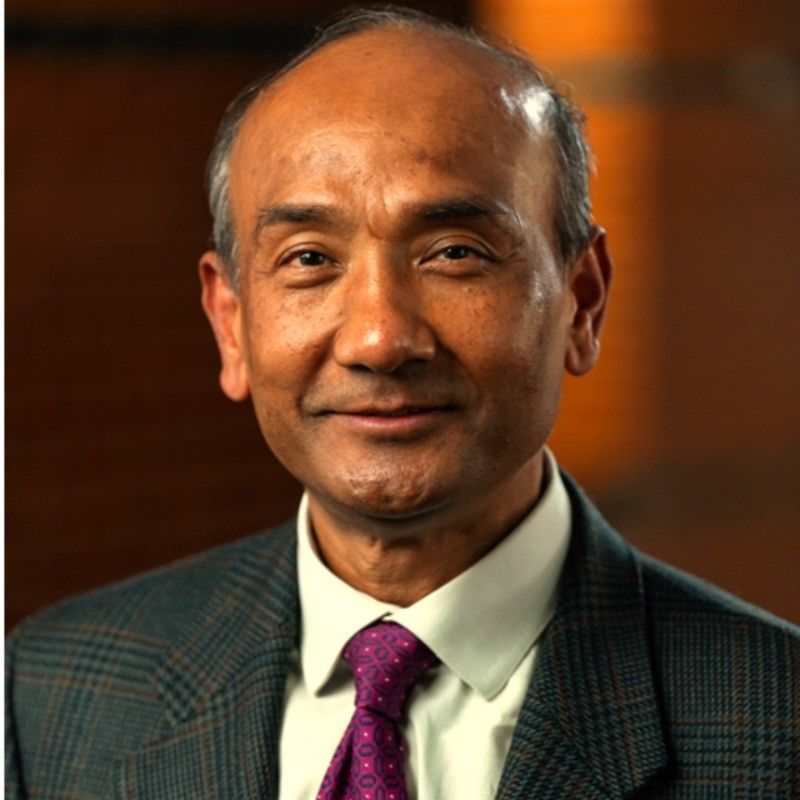
Professor of Structural Engineering and Applied Mechanics,
UConn School of Civil & Environmental Engineering
The School of Civil and Environmental Engineering (SoCEE) at the University of Connecticut proudly announces that Professor Ramesh B. Malla, Ph.D.; F. ASCE, Life Member; F. EMI, A.F. AIAA, Life M. ASME; Life F. ASNEngr; M. CASE has been awarded the 2026 Columbia Medal by the American Society of Civil Engineers (ASCE). The Columbia Medal is a premier national and international honor awarded in even-numbered years to recognize sustained and outstanding contributions to aerospace engineering, sciences, and technology, including the knowledge transfer and dual technology between the fields of civil and aerospace engineering.
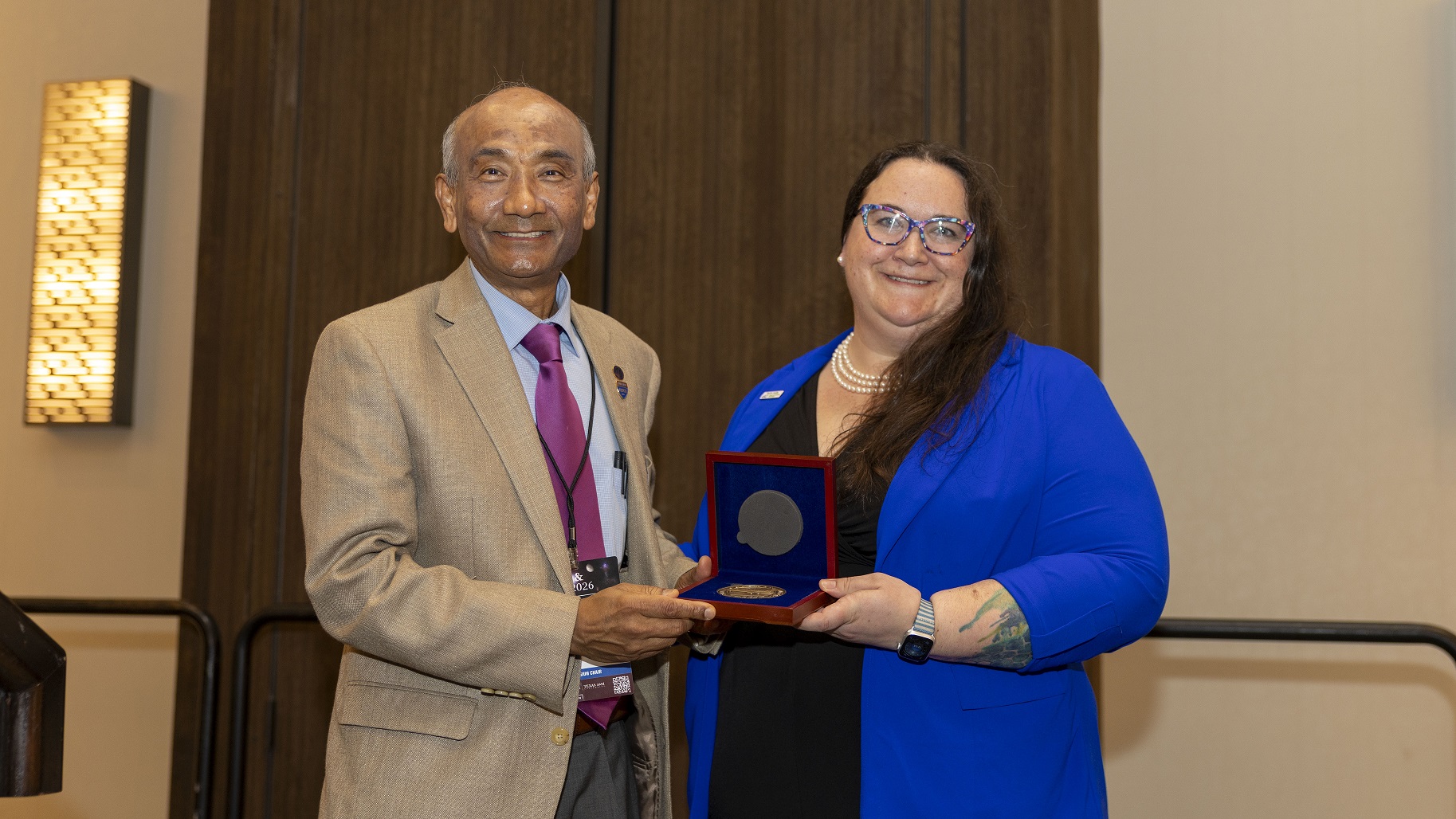
Dr. Alaina Roberts, Chair of ASCE Center for Technical Advancement (CTA) presenting the ASCE Columbia Award to Dr. Ramesh B. Malla, Professor, University of Connecticut, Storrs, CT ( Photo taken at the Earth & Space 2026 Conference on April 15, 2026 held at College Station, TX).
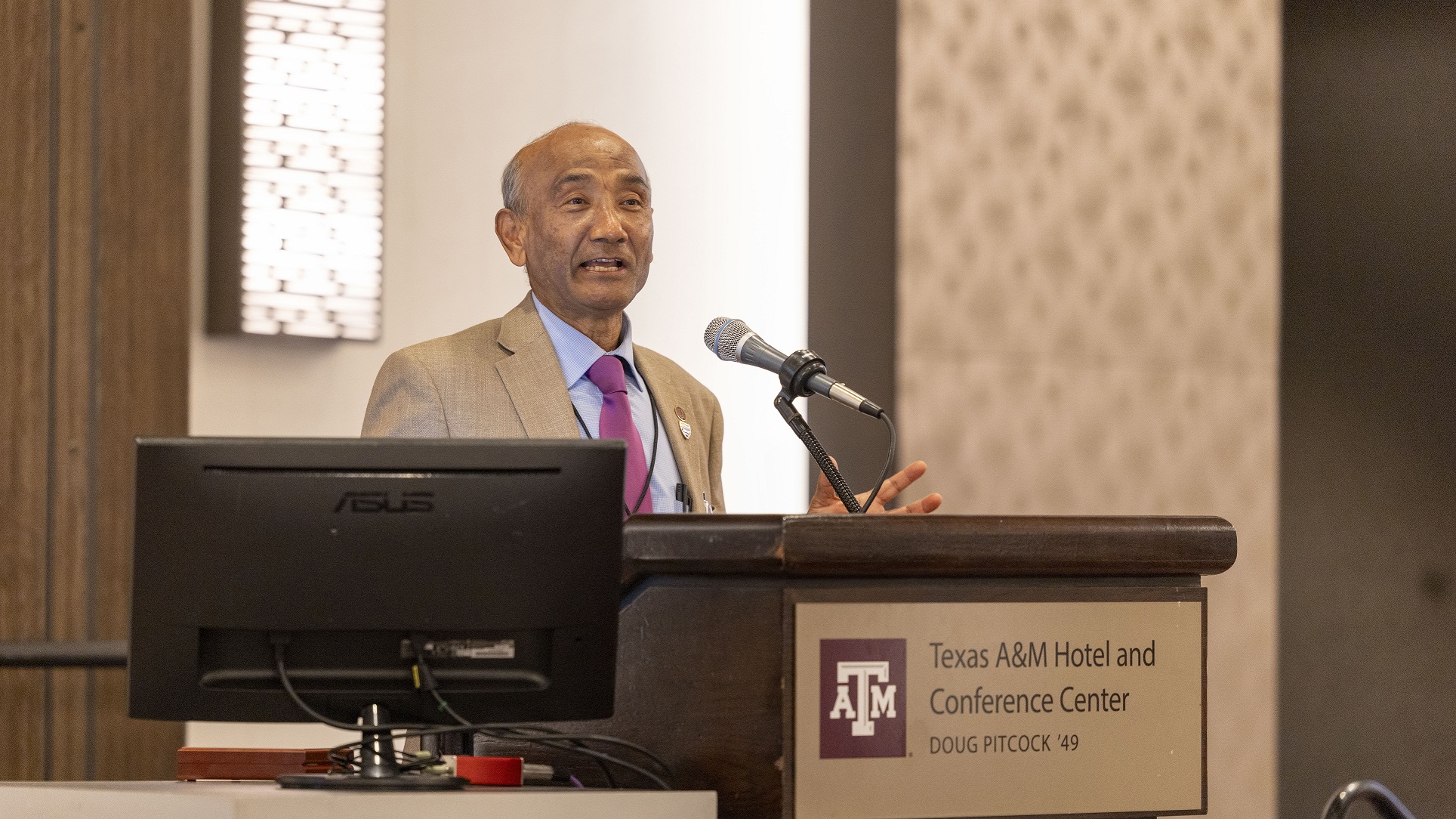
Dr. Ramesh B. Malla, Professor, University of Connecticut, delivering the ASCE Columbia Medal award acceptance keynote plenary lecture at the Earth & Space 2026 Conference held at College Station, TX on April 15, 2026.
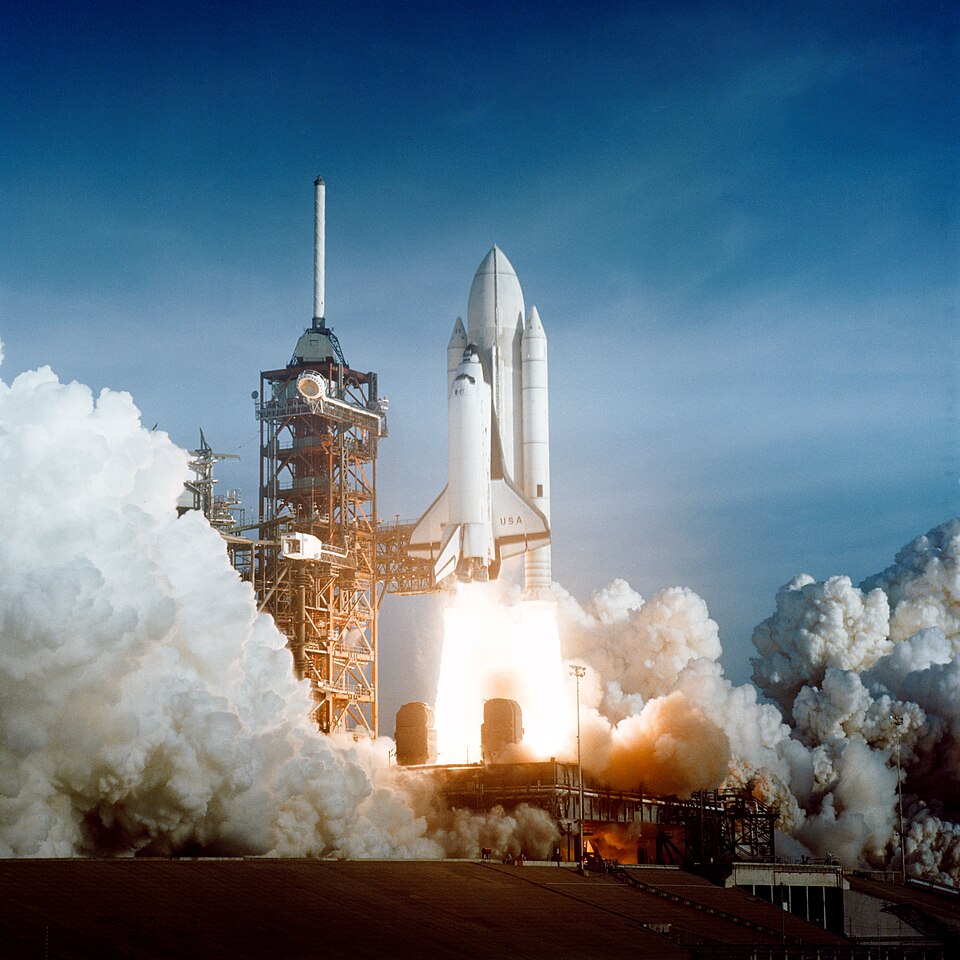
The Space Shuttle Columbia, for which the ASCE Columbia Medal is named. Photo credit: NASA or National Aeronautics and Space Administration
Established in 1982 by ASCE’s Aerospace Division, the Columbia Medal commemorates the first orbital flight of the United States Space Shuttle Columbia and also honors the astronauts who perished in the 2003 tragedy of the spacecraft. The endowed award recognizes individuals whose careers exemplify the highest standards of engineering leadership across teaching, research, design, development, planning, and professional service.
Professor Malla is recognized for “sustained, outstanding, and life-long interdisciplinary contributions to research, teaching, and professional service, and for visionary leadership in aerospace and civil engineering advancing the foundations for future space and lunar infrastructure enabling long-term human presence beyond Earth.”
"I am excited to be the very first civil engineer by academic, professional training, and background as well as the very first individual from within the Aerospace Division membership selected for the ASCE Columbia Medal in the history of the award," Professor Malla shared.
Distinguished Community of Columbia Medal Honorees
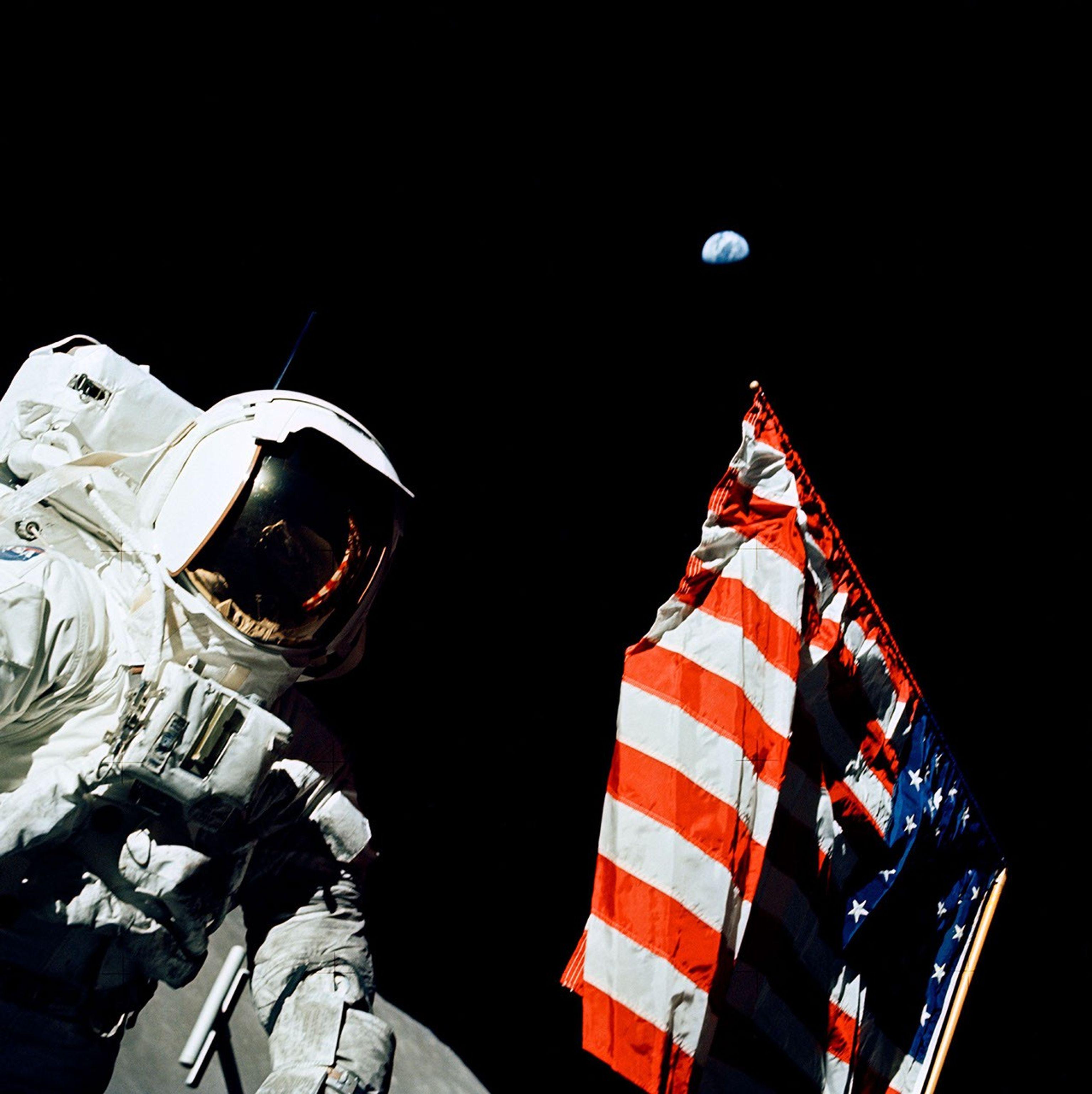
During the Apollo 17 mission, Harrison H. Schmitt took a break from moon walking to pose with the American flag and Earth.
Dr. Malla joins an extraordinary lineage of Columbia Medal recipients whose work has shaped the future of space exploration and aerospace engineering. Past awardees include:
- 2010 – Harrison H. Schmitt, Ph.D., Apollo 17 astronaut and geologist, the last astronaut to walk on the Moon.
- 2014 – Donald R. Pettit, Ph.D., NASA astronaut and engineer who served aboard the International Space Station.
- 2018 – Elon Musk, CEO of SpaceX, recognized for transformative leadership in commercial space systems.
- 2020 – Brent Sherwood, Vice President at Blue Origin and NASA program manager.
Full list of past winners: ASCE Columbia Medal Past Award Winners.
“I am extremely honored to receive the ASCE Columbia Medal, and at the same time, truly humbled to be among the distinguished individuals in the field of space exploration who have received this award before me,” says Dr. Malla. “I would like to express my deepest appreciation and sincere gratitude to all of my graduate and undergraduate students, postdoctoral fellows, collaborators, research sponsors, and the University of Connecticut for their support throughout my career and making this achievement possible.”
A Career Bridging Earth and Space
Dr. Malla’s work stands at the intersection of civil engineering/structural mechanics and aerospace systems. His research and teaching focus on structural mechanics, dynamics and vibration of structures, and finite element modeling, with applications that span terrestrial infrastructure and orbital and lunar environments.
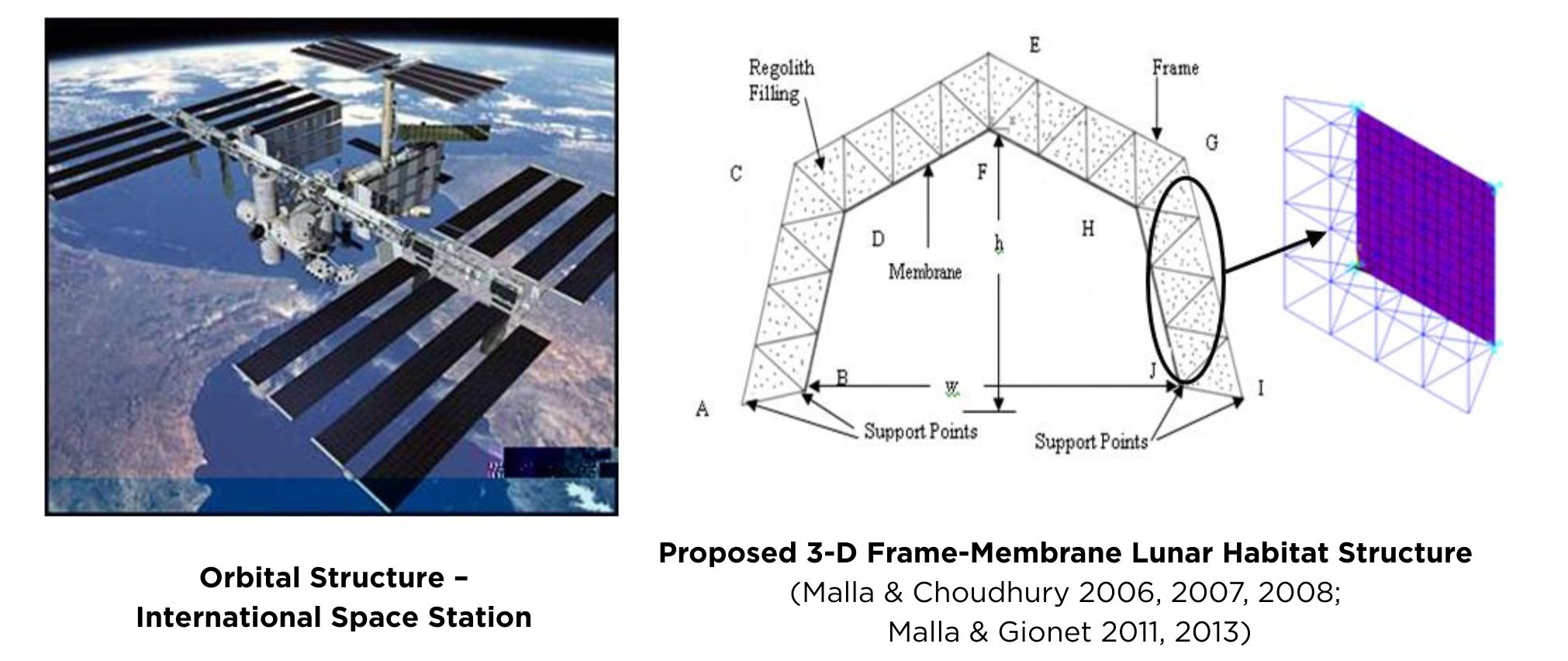
Over four decades at UConn in the faculty position, in the extraterrestrial front, Professor Malla has advanced research in the dynamics of orbital large space station-type structures and solar sails, water processing packed beds for space life support system applications, lunar habitat structures and infrastructure design/analysis under harsh environmental factors including extreme temperature swings and hypervelocity meteoroids, and percussive dynamic penetrometers for planetary exploration. His scholarship in the terrestrial side encompasses fiber optic sensing systems for civil infrastructure, mechanics of subgrade soils, railroad bridge dynamic response monitoring and assessment, highway bridge expansion joint monitoring and sealing, and environmentally friendly small-scale renewable hydropower harvesting systems.
His early research was supported by a National Science Foundation (NSF) Research Initiation Award in 1991, where he initiated studies on the dynamic effects of sudden member failure in truss structures. Through his career, additional funding from National Aeronautics and Space Administration (NASA) Headquarters, the NASA EPSCoR program, the NASA/Connecticut Space Grant Consortium, U.S. Army, U.S. Navy/ONR/NIUVT, U.S. Department of Transportation, Hamilton Sundstrand Space Systems International, Honeybee Robotics, the New England Transportation Consortium, and other private industry have supported his work on terrestrial and space systems and resilient infrastructure.
Professor Malla adds “Last but not least, what I have been able to accomplish in my professional career would not have been possible without the steadfast and unwavering support, love, care, and selfless sacrifice of my wife, Dr. Sun-Kyeong Lee. She is no longer with us to share this recognition, however, I remain forever indebted to her and dedicate this award to her memory.”
Engineering for Extreme Lunar and Planetary Environments
In his invited 2018 presentation, “Building Structures on the Moon and Mars: Engineering Challenges and Structural Design Parameters for Proposed Habitats,” Professor Malla outlined the structural resiliency framework necessary for extraterrestrial environments. He defined resiliency in terms of robustness, resourcefulness, rapid recovery, and redundancy – principles critical for habitats exposed to micrometeorite impacts, hard vacuum conditions, extreme thermal cycles, radiation exposure, seismic activity, and reduced gravity.
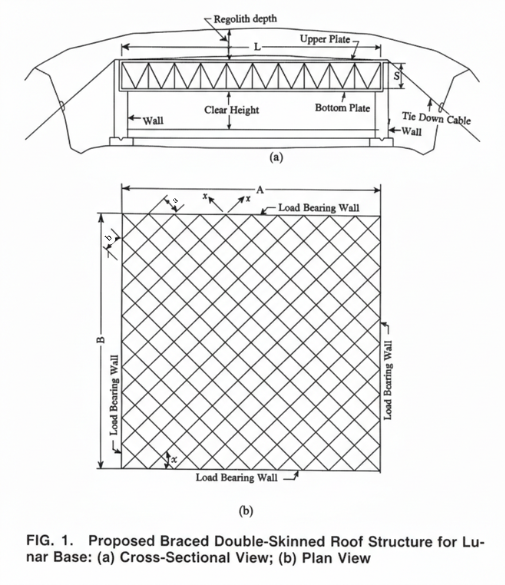
Professor Malla’s pioneering work in lunar structural systems dates back more than three decades. In one of the earliest engineering concepts for a human lunar habitat, he and collaborators developed a simplified analytical design method for a braced double-skinned structural system intended for lunar applications (Malla, Adib-Jahromi, & Accorsi, 1995). This concept, developed in the early 1990s, proposed a pressurized core protected by an external structural layer capable of resisting radiation, impact loading, and extreme thermal variations. The study introduced a practical preliminary design methodology based on Navier and Levy plate solutions and validated through finite element analysis, providing one of the first structured frameworks for lunar base structural sizing.
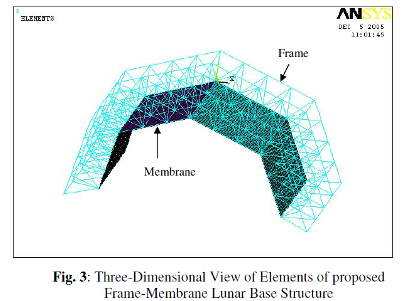
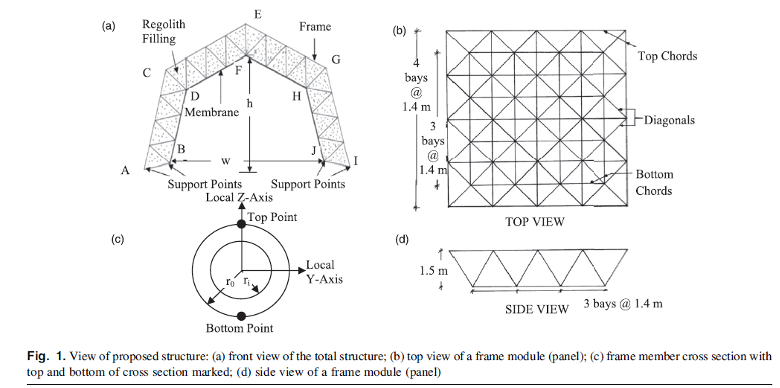
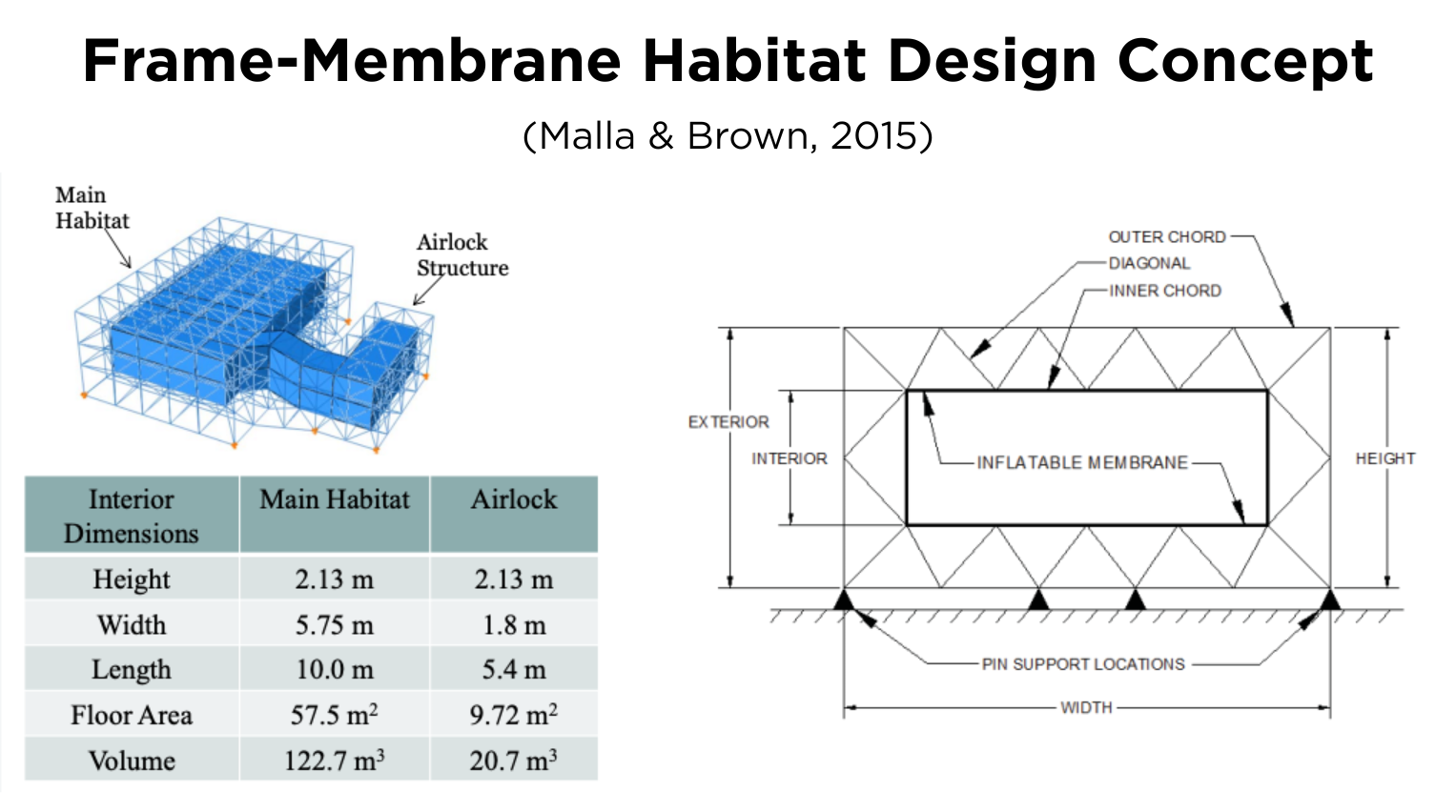
This early analytical framework established a foundation for the more advanced nonlinear modeling and habitat resiliency studies that would follow in subsequent decades. In early 2000, Professor Malla’s research team proposed a unique frame-membrane concept of lunar habitats (Malla & Choudhury 2006; Malla & Gionet 2013; Malla & Brown 2015).
While the exterior frame structure gives needed rigidity for strength to the habitat, the membrane material layer inside helps contain/retain the internal pressurization/artificial atmosphere for human to live. The design is motivated by the light weight requirement to reduce to launch cost and the speedy assembly/construction of habitats on the Moon, taking prefabricated panels in a spacecraft from Earth. This concept also allows easy expansion of the habitat as more floor space is needed in the future.
His work compares lunar, Martian, and Earth surface conditions, noting that lunar gravity is approximately one-sixth that of Earth (1.62 m/s²), near hard vacuum/no atmosphere, while lunar temperatures range from as low as roughly negative -233°C in shadowed crater during night to positive 123°C during day. Mars presents lower atmospheric pressure and approximately one-third Earth’s gravity. These environmental parameters directly influence structural sizing, prestressing requirements, regolith shielding thickness, and material performance.
Through analytical and finite element computational analysis, Dr. Malla and collaborators examined debris impact loading, internal pressurization at 14 psi, regolith shielding effects, and temperature gradients. Lunar surface temperature cycles, including mid-day peaks near 387 K and night minimum near 102 K in equatorial region, were incorporated into habitat stress and displacement analyses. These simulations determining the lunar surface and subsurface temperature variations align with Apollo 15 and 17 experimental data and provide validated design parameters for resilient habitat systems (Malla & Brown 2015; Tripathi & Malla 2025).
Extreme Lunar Temperature Effects on Habitat Structures
Beyond impact hazards, Professor Malla’s research team has addressed the severe daily temperature cycles experienced on the lunar structure. In a study published in Acta Astronautica (2023), his team developed three-dimensional temperature profiles for dome-shaped lunar habitats, modeling transient heat transfer through structural layers and regolith cover. The analyses demonstrated how thermal gradients evolve throughout the lunar day–night cycle and directly influence stress development within habitat shells.
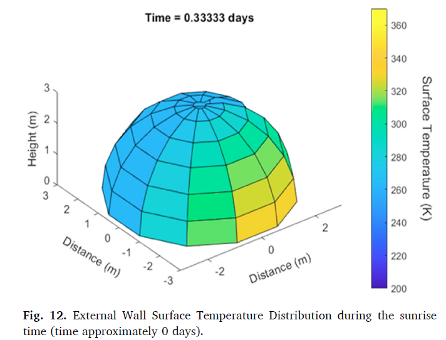
Subsequent research presented at Earth & Space 2024 quantified stresses and deflections in dome-shaped lunar habitats under extreme thermal loading, both with and without regolith cover. Results showed that regolith significantly moderates temperature fluctuations and reduces stress amplitudes, reinforcing its dual role in radiation shielding and structural resilience.
Hypervelocity Meteoroid Impact and Regolith Shielding
Because the Moon lacks an atmosphere, meteoroids and micrometeoroids strike the lunar surface directly at extremely high velocities/hypervelocities) ranging from 2 km/s to 72 km/s; with typical velocities being around 18–22 km/. Even very small particles can generate extreme shock pressures capable of perforating unshielded structures. Recognizing this fundamental hazard, Dr. Malla and his research team have developed physics-based engineering methodologies for predicting crater geometry and peak shock pressure resulting from hypervelocity impacts on both unshielded and regolith-shielded lunar structures.
In a recent peer-reviewed study published in the Journal of Aerospace Engineering (2024), his team presented analytical and scaling-law-based tools for estimating impact cratering and shock pressure using planar impact approximation models and dimensional analysis. The work provides practicing engineers with design-ready methods for evaluating impact resistance without reliance on computationally intensive simulations. Parametric analyses demonstrated that impact velocity and impactor density govern peak shock pressures, while impactor mass strongly influences crater geometry.
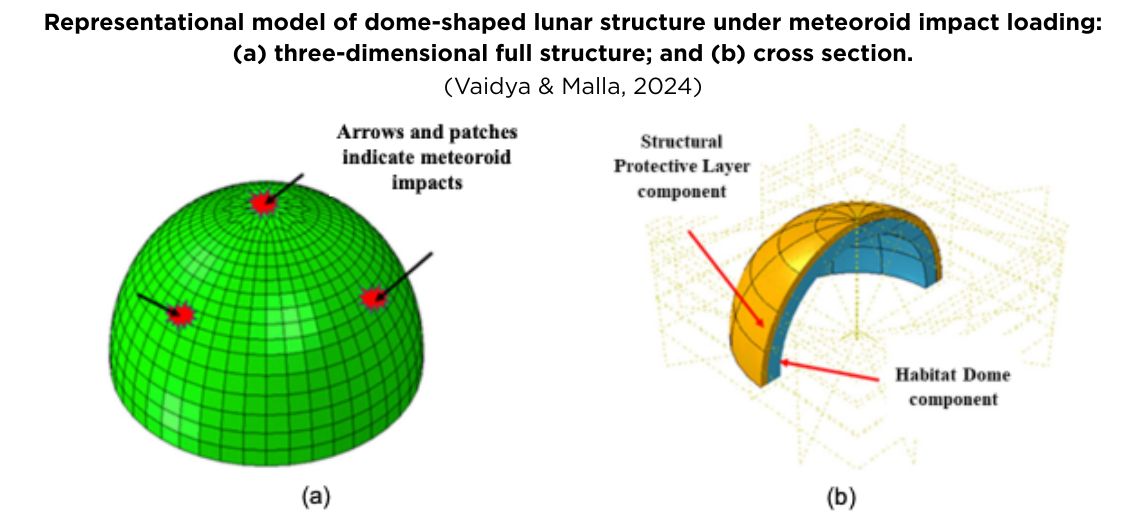
Complementary research presented at the ASCE Earth & Space 2024 Conference further examined regolith shielding performance. These studies quantified crater formation and impact attenuation in granular lunar soil analogs, highlighting the critical importance of properly designed regolith cover layers to protect habitats and infrastructure from hypervelocity impacts.
Tall Lunar Solar Power Structures
Sustainable power generation is essential for long-term human presence on the Moon. Dr. Malla’s research has also examined the structural feasibility of tall truss-type solar power towers designed for lunar deployment. Recent work presented at Earth & Space 2024 investigated the effects of extreme daily temperature variations on large-scale truss systems subjected to lunar thermal cycling.
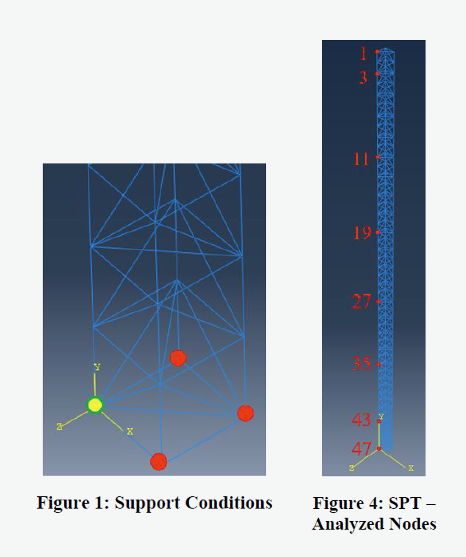
The analyses evaluated temperature-induced stresses, structural stability, and serviceability limits under reduced lunar gravity and extreme surface temperature gradients. These findings contribute directly to early-stage engineering frameworks for future lunar power infrastructure, a foundational requirement for any sustained exploration mission.
Together, these studies span conceptual design, thermal mechanics, hypervelocity impact physics, and infrastructure systems, forming a comprehensive engineering framework for sustained human presence on the Moon.
Leadership in NASA-Funded Resilient Habitat Research
Professor Malla has played a leading role in advancing UConn’s space-related research. He played the key role for the State and was the Lead (Principal Investigator) from the University of Connecticut to secure funding from the National Aeronautics and Space Administration (NASA) for the establishment of the State-wide Connecticut Space Grant College Consortium in 1991. He served as the University of Connecticut Campus Director for the Consortium for the first 9 years.
In 2019, he served as Institutional Lead for UConn in a NASA-funded, multi-institutional Space Technology Research Institute focused on resilient deep-space habitats. The Resilient ExtraTerrestrial Habitats Institute (RETHi), funded for up to $15 million over five years, aimed to design and prototype autonomous, resilient habitats capable of operating in extreme lunar and planetary environments.
As highlighted in UConn Today (April 18, 2019), Dr. Malla described the Moon as “a hard vacuum” with severe temperature fluctuations and constant radiation exposure, emphasizing the need for habitats that can maintain critical functions and rapidly recover from disruption. His team integrates structural mechanics, smart sensing, intelligent health monitoring, and autonomous systems to support NASA’s long-term human exploration goals.
Institutional and Professional Leadership
Dr. Malla joined UConn in 1985 as visiting faculty and is now a full Professor in the Department of Civil and Environmental Engineering. He previously served as Associate Head of the Department and as Graduate Programs Director for 8 years, and as mentioned above also served as the UConn Campus Director of the NASA-sponsored Connecticut Space Grant College Consortium for its first nine years (1991-2000).
He has been deeply engaged in, and has extraordinary record of national and international professional leadership. Professor Malla served as Chair of the Executive Committee of the ASCE Aerospace Division (ASD) and has contributed to numerous ASCE technical committees, including Space Engineering and Construction (current Chair); Dynamics and Controls (former chair); Structures, Structural Dynamics and Materials (Chair) Advanced Structures and Materials; Lunar Base Structures (founder and chair); and Special Structures. He also served as Founding Chair of the AIAA Journal of Spacecraft and Rockets, a guest editors for multiple journals, and has been a member of editorial boards for leading aerospace and space structures journals.
Throughout his career, he has organized more than 50 national and international conferences, several on the leadership positions of Honorary, General, Technical, or Symposium Chair of prominent and highly regarded conferences; chaired over 90 technical sessions, edited multiple ASCE proceedings volumes, and published more than 170 technical works, with sustained impact in structural dynamics and aerospace engineering. More notably, under the auspices of the ASCE ASD Space Engineering and Construction technical committee, Professor Malla is currently leading the timely, but monumental initiative of preparing initial guidelines for lunar infrastructure engineering design, analysis and construction.
Global Roots, Enduring Impact
Professor Malla was born and raised in Chhoprak, Gorkha, Nepal; and graduated from the local Shree Mandali High School, placed in the First Division having ranked among top 70 among approximately 20,000 students nation-wide in the S.L.C. examination). After receiving his initial college education in Nepal, he earned his B.S. in Civil Engineering with First Division with Distinction from the Indian Institute of Technology, Kanpur, India, followed by an M.S. from the University of Delaware and a Ph.D. in Structural Mechanics/Civil Engineering from the University of Massachusetts Amherst. His academic excellence was recognized early with national honors, and he has continued to serve as a mentor and leader in international engineering communities, including as Founding President of the American Society of Nepalese Engineers.
Over his career, Professor Malla has received numerous honors, including the Outstanding Professional Service Award from the ASCE Aerospace Division, recognition from NASA and the State of Connecticut, and multiple editorial and leadership appointments in engineering societies.
Advancing the Mission of SoCEE
The 2026 Columbia Medal highlights the strength of SoCEE’s interdisciplinary research portfolio and its leadership at the intersection of civil, structural, and aerospace engineering. Professor Malla’s career demonstrates how core principles of structural mechanics and infrastructure resilience can extend beyond Earth, shaping the engineering foundations for orbital platforms, lunar habitats, and future planetary exploration.
The ASCE Columbia Medal was formally presented to Professor Malla on April 15th at the ASCE Aerospace Division’s Earth & Space 2026 Conference, April 13-16, 2026. He delivered the award acceptance keynote/plenary lecture on topic titled “Building Home on the Moon: Extreme Daily Temperature Swing and Hypervelocity Meteoroid Impact.”
The SoCEE community congratulates Professor Ramesh Malla on this extraordinary achievement and celebrates his enduring contributions to engineering research, education, and professional service.
Learn More:
- Malla’s research website: https://malla.engr.uconn.edu/
- SoCEE faculty profile: https://cee.engr.uconn.edu/people/malla-ramesh-b
- UConn Today feature (April 18, 2019): https://today.uconn.edu/2019/04/uconn-researchers-help-design-resilient-deep-space-habitats/
- ASCE Magazine article ("Space Place"): https://ascelibrary.org/doi/10.1061/ciegag.0001450