2026 Senior Design Award Winners
The School of Civil and Environmental Engineering celebrated the accomplishments of its graduating students during the 2026 Senior Design Demonstration Day, where Civil Engineering and Environmental Engineering teams presented innovative capstone projects to faculty, industry professionals, alumni, and judges from across the country.
Senior Design Day provides students with the opportunity to apply the technical knowledge and problem-solving skills developed throughout their time at UConn to real-world engineering challenges. Projects were evaluated through presentations, demonstrations, videos, and discussions with judges and attendees.
This year’s top-performing teams from Civil Engineering and Environmental Engineering were recognized during the awards ceremony following the event.
Civil Engineering Awards
First Place: CE02 – East Main Street Corridor Improvements
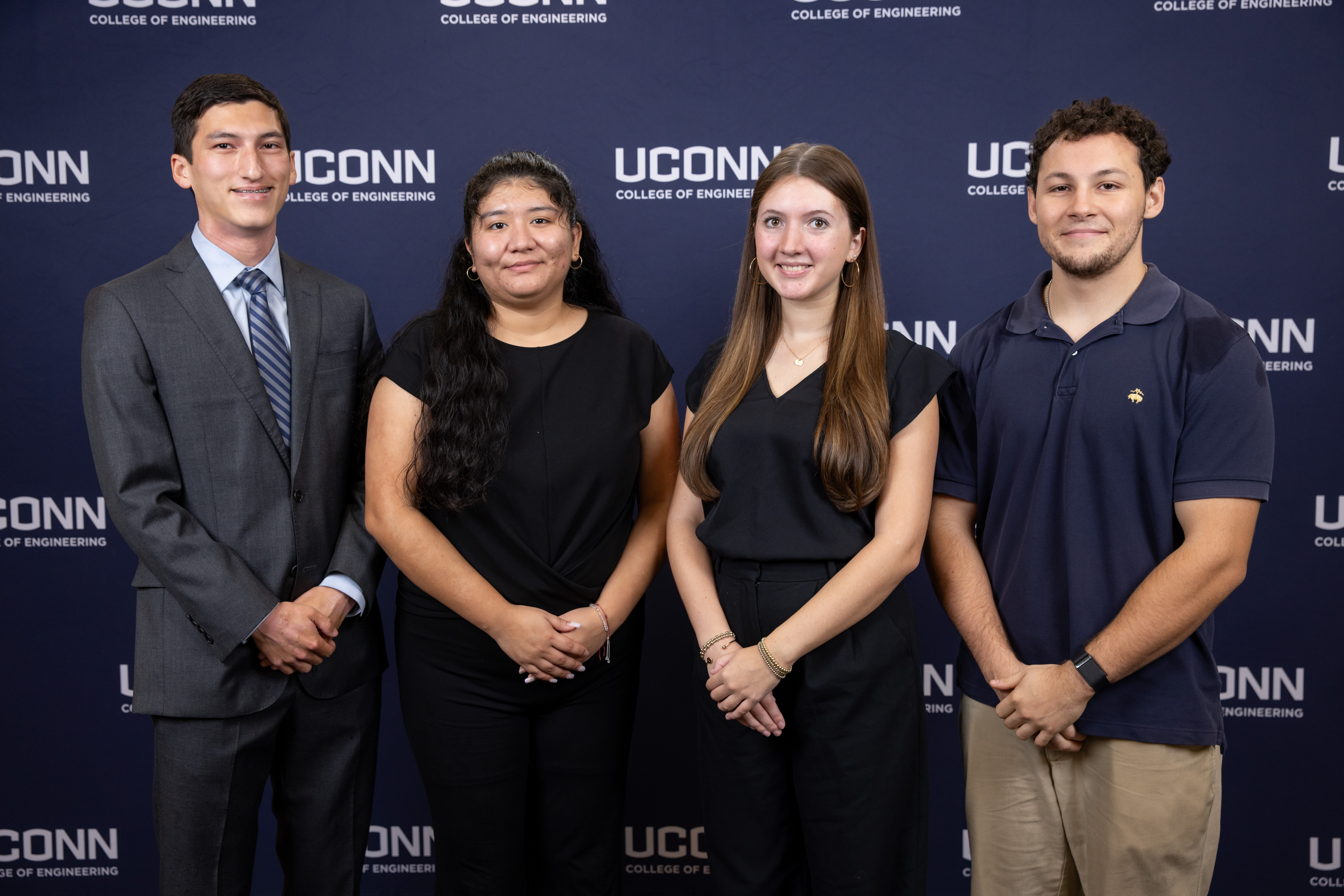
Civil Engineering Team 2
Sponsored by Jacobs
Team Members: Christo Jamo, Bianca Canales, Ava Grace, Daniel Camacho
This team evaluated safety and traffic conditions along a heavily travelled section of East Main Street in Waterbury between Scott Road and Pierpont Road. The project focused on improving conditions for both drivers and vulnerable road users in an area with a history of serious and fatal crashes, limited pedestrian infrastructure, and several underperforming intersections. The team analyzed roadway geometry, traffic operations, and safety data to develop short-, mid-, and long-term improvement recommendations, including cost estimates. Their work supports the City of Waterbury’s ongoing efforts to modernize the East Main Street corridor and create a safer, more accessible roadway for the community.
Faculty Advisor: Dr. John Ivan
Click here for more details and to watch their video presentation.
Second Place: CE15 – Court Street Pedestrian Bridge
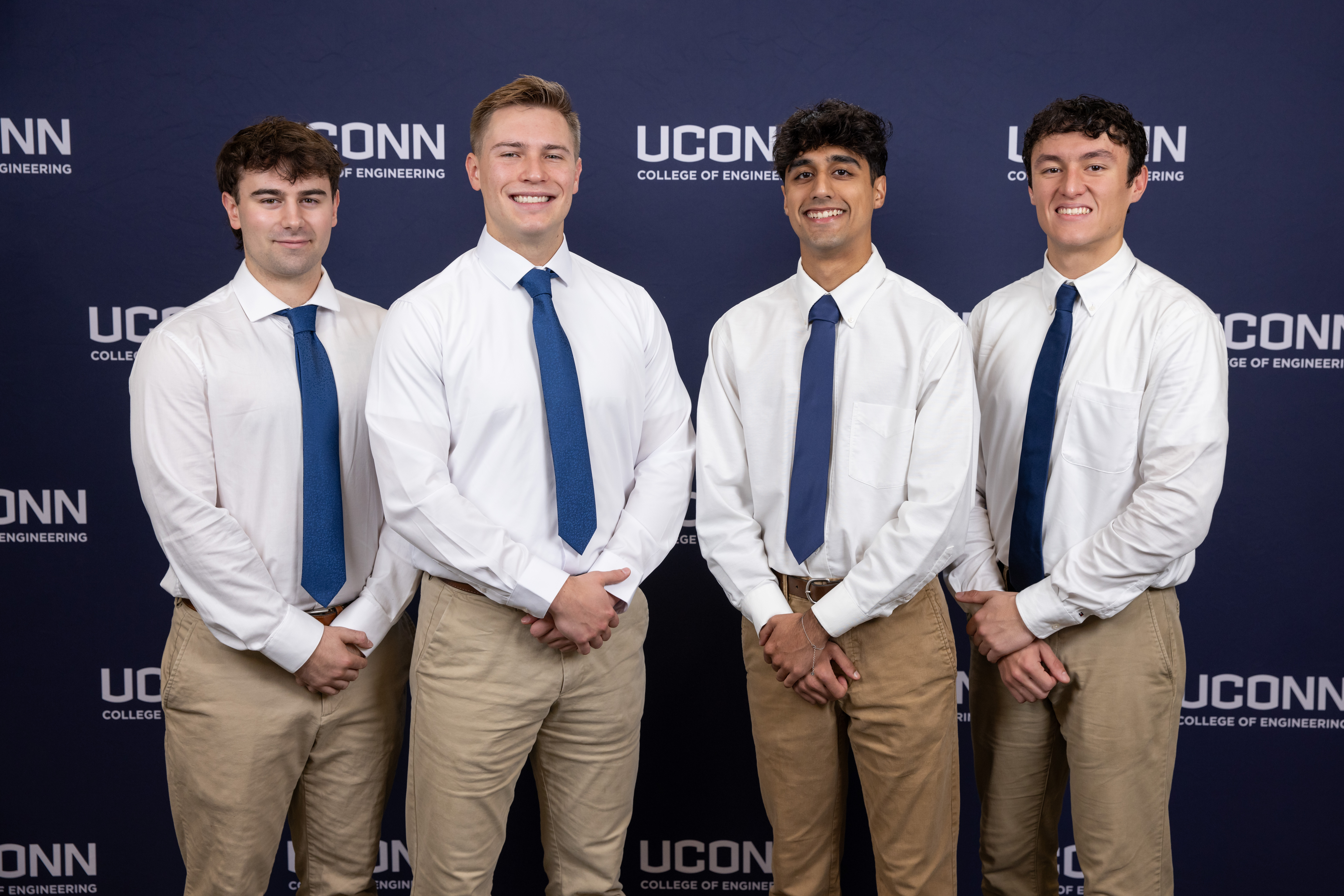
Civil Engineering Team 15
Sponsored by WSP
Team Members: Jack Rilli, Jameson Fauth, Abhay Kohli, Matthew Harris
This team developed an alternative design study for a new pedestrian bridge in downtown New Haven to support ongoing redevelopment efforts near the State Street Station corridor. The project involved converting an existing roadway bridge over Court Street and the rail station into a pedestrian-focused structure better suited to the area’s high foot traffic and urban environment. The team designed the bridge’s horizontal and vertical alignments while also addressing structural performance, aesthetics, and constructibility. Their proposal aimed to create a safe, functional, and visually appealing connection that enhances accessibility and complements the surrounding redevelopment efforts.
Faculty Advisor: Dr. Alexandra Hain
Click here for more details and to watch their video presentation.
Third Place: CE04 – Rowayton Village Placemaking
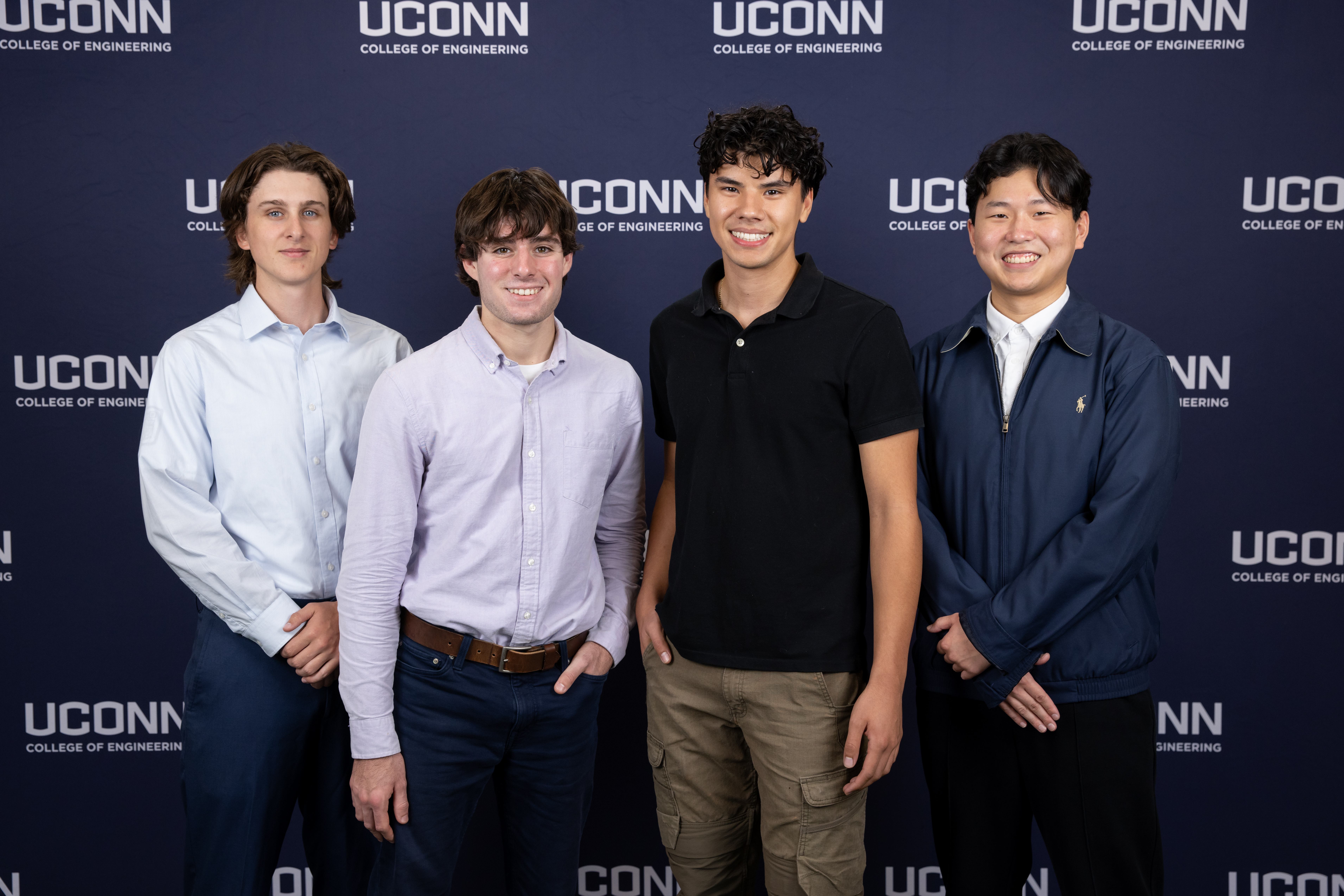
Civil Engineering Team 4
Sponsored by Town of Norwalk, CT
Team Members: Eamon Manely, Samuel Cannizzo, Francis Kocsis, Yuhe Zou
This team developed streetscape and traffic calming improvements for the entrance corridor to Rowayton Village in Norwalk, Connecticut, with the goal of creating a safer and more welcoming destination for residents and visitors. The project addressed issues including high vehicle speeds, unsafe pedestrian conditions, inconsistent sidewalk infrastructure, and congestion at the Rowayton Avenue and Wilson Avenue intersection. The team proposed enhancements such as raised crosswalks with flashing beacons, curb extensions, landscaped public spaces, decorative lighting, brick sidewalks, organized parking, and a seasonal parklet to encourage community activity and economic growth. Their redesign also transformed the main intersection into a raised three-way stop with a public plaza, improving pedestrian safety while preserving the historic and coastal character of the village.
Faculty Advisor: Dr. John Ivan
Click here for more details and to watch their video presentation.
Environmental Engineering Awards
First Place: ENVE09 – Design and Hydraulic Analysis of Culverts in Beaver Brook
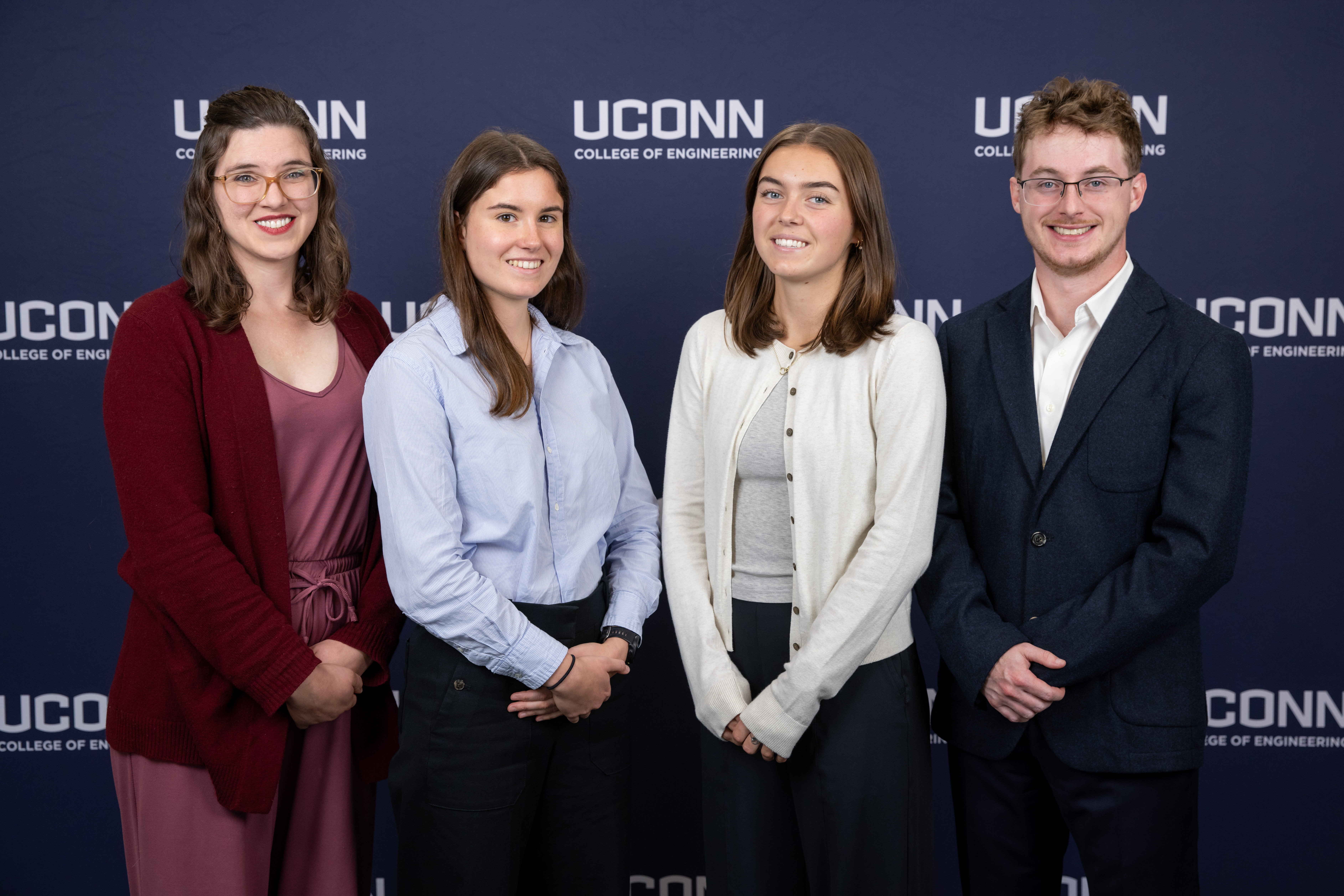
Environmental Engineering Team 9
Sponsored by Town of Wethersfield, CT
Team Members: Grace Mastalli-Lowther, Caroline Peak, Lisel Nee, Ben Piegat
This team developed flood mitigation solutions for Beaver Brook in Wethersfield, Connecticut, where undersized culverts near Silas Deane Highway and Stillman Walk contribute to significant upstream flooding. The project evaluated existing site conditions and analyzed how the current reinforced concrete pipe culverts impact flood elevations and surrounding properties during major storm events. Using HEC-RAS hydraulic modeling, the team designed and compared two improvement alternatives — a box culvert replacement and a natural channel reconstruction — under both 100-year and 500-year storm scenarios. Their work aimed to improve water flow, reduce flood risk for nearby homes and businesses, and support a more resilient infrastructure solution for the community.
Faculty Advisor: Dr. Marina Astitha
Click here for more details and to watch their video presentation.
Second Place: ENVE06 – Improved Sludge Processing
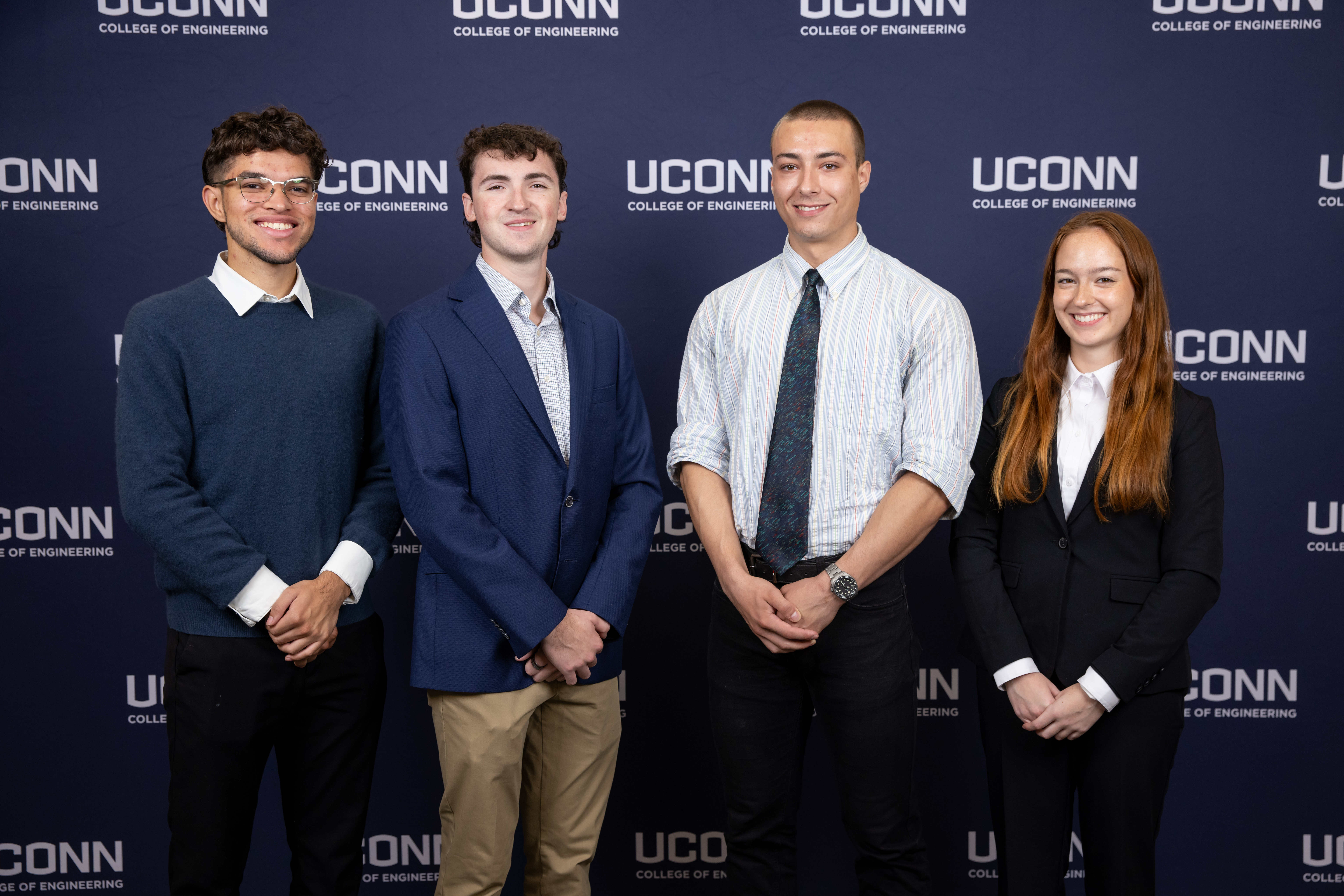
Environmental Engineering Team 6
Sponsored by Windham Water Works
Team Members: Malcolm Brown Morales, Alex Adamo, Joe Zeppieri, Zinnia Kling
This team developed a long-term sludge management solution for Windham Water Works to improve the efficiency of its drinking water treatment residuals process. The project focused on addressing increasing capacity concerns at the facility’s sludge drying beds by analyzing current sludge production and evaluating sustainable dewatering alternatives. After comparing multiple options based on operational efficiency, cost, sustainability, and compatibility with existing infrastructure, the team designed a belt press system capable of processing up to half of the facility’s daily sludge production. Their design reduces the load on existing drying beds, improves long-term sludge handling capacity, and supports more efficient water recovery within the treatment process.
Faculty Advisor: Dr. Baikun Li
Click here for more details and to watch their video presentation.
Third Place: ENVE02 – Stormwater Management Design for Affordable Housing Development
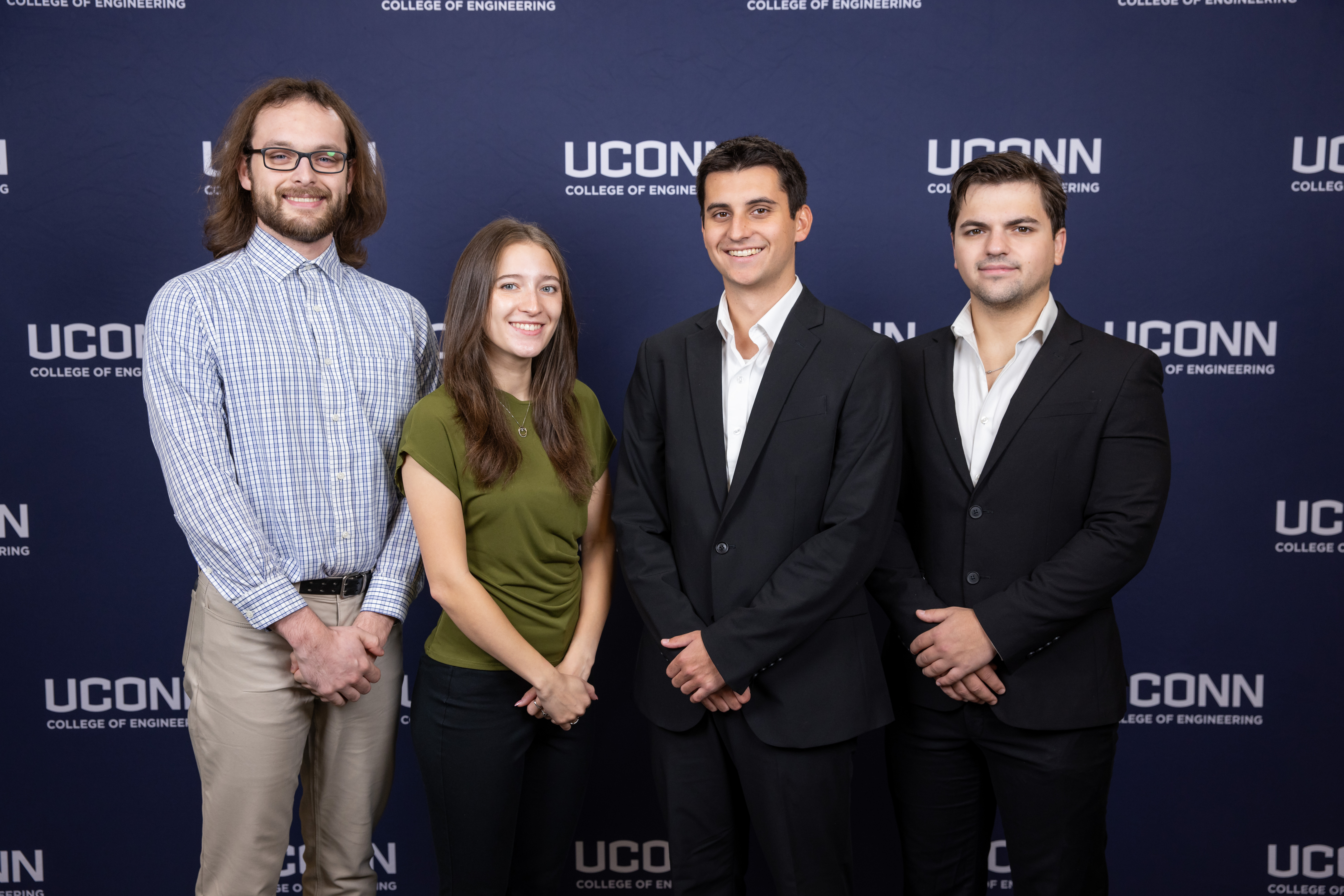
Environmental Engineering Team 2
Sponsored by CHA Consulting, Inc.
Team Members: Paul Beisler, Melanie Ramos, Jacob McCormick, Gabriel Scott
This team designed a stormwater management plan for a proposed affordable housing development in Hebron, Connecticut. The project focused on managing runoff from a planned three-story residential building and adjacent structures totaling approximately 50 apartment units. Because the site borders a nature preserve, elementary school, baseball field, and roadway, the team evaluated site constraints and regulatory requirements to develop a solution that protects nearby land uses and natural resources. Their work supports responsible development by balancing the need for affordable housing with effective stormwater control and environmental protection.
Faculty Advisor: Dr. Marina Astitha
Click here for more details and to watch their video presentation.
Congratulations to all teams for their exceptional work and dedication!
The School recognizes the many alumni and external judges from across the country who participated virtually and in person to evaluate projects and engage with students during the event.
Senior Design Day remains one of the School’s most important annual traditions, showcasing the creativity, collaboration, and technical excellence of UConn engineering students as they prepare to enter the profession.
To view the full list of 2026 Civil Engineering Senior Design projects, click here.
To view the full list of 2026 Environmental Engineering Senior Design projects, click here.